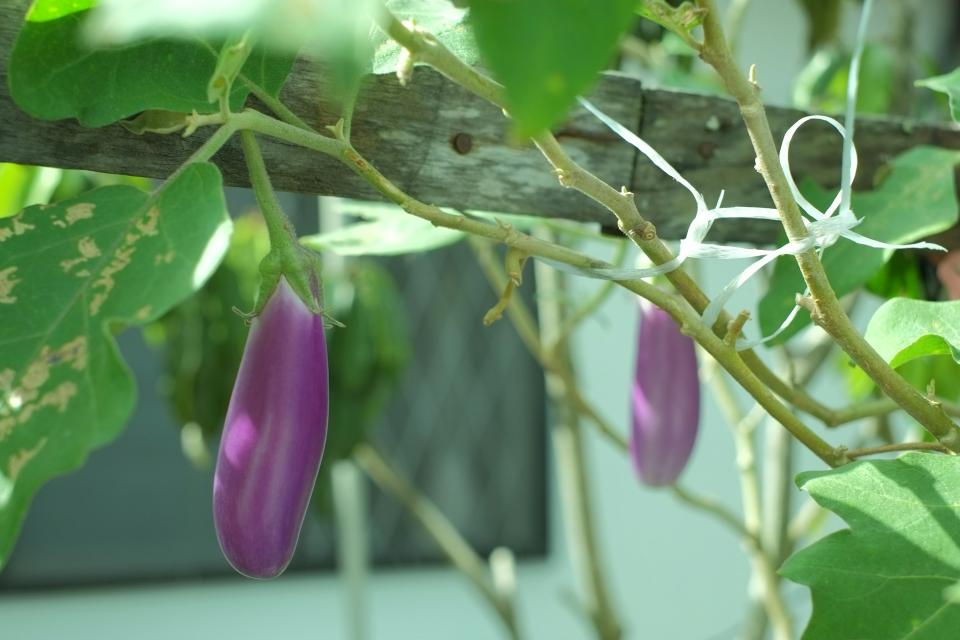
Eggplant Growth Stages: Timeline From Seed to Harvest
Quick answer: Eggplant usually moves through six practical stages: germination, seedling growth, transplant establishment, vegetative growth, flowering and fruit set, and fruit development through harvest. Most varieties need about 65–80 days from transplanting to the first harvest, while plants started from seed commonly take roughly 100–140 days overall. Warm soil, warm nights, full sun, steady moisture, and timely harvesting matter more than following an exact calendar.
Eggplant can look frustratingly slow at first. A seedling may spend weeks building roots and leaves before it produces a single flower, then suddenly begin setting fruit once summer heat arrives. Knowing what a healthy plant should look like at each stage helps you tell normal slow development from a genuine problem.
The timing below is a useful guide rather than a rigid schedule. Variety, temperature, transplant size, sunlight, soil fertility, and water all affect how quickly an eggplant progresses.
Eggplant Growth Stages at a Glance
| Stage | Typical timing | What you should see | Main care priority |
|---|---|---|---|
| Germination | About 7–14 days | Seed coat opens and cotyledons emerge | Warm, evenly moist seed-starting mix |
| Seedling growth | Weeks 2–8 | True leaves, stronger stem, expanding roots | Bright overhead light and careful watering |
| Hardening off and transplanting | About weeks 8–10 | Sturdy plant adapting to outdoor conditions | Wait for warm nights and avoid root disturbance |
| Vegetative growth | First 3–6 weeks after transplant | Rapid leaf, branch, and root growth | Consistent water, full sun, support, and moderate feeding |
| Flowering and fruit set | Often 4–8 weeks after transplant | Purple or white flowers followed by tiny fruit | Protect plants from heat, cold, and water stress |
| Fruit development and harvest | Usually 65–80 days from transplant | Fruit reaches variety size with glossy skin | Harvest promptly with pruners |
Stage 1: Germination
Eggplant seeds germinate best in warm conditions. Plant them about 1/4 inch deep in a sterile seed-starting mix and keep the mix evenly moist. A heat mat is often useful because eggplant is noticeably slower in cool soil.
Under good conditions, seedlings commonly emerge within 7–14 days. The first leaves are two smooth cotyledons, or seed leaves. They do not resemble the larger, slightly fuzzy true leaves that appear later.
What healthy germination looks like
- The stem emerges upright rather than collapsing at the soil line.
- The two cotyledons open and turn green.
- The seedling begins producing a true leaf from the center.
- The mix stays moist without remaining waterlogged.
Why eggplant seeds fail to germinate
Cool growing media is the most common reason for slow or uneven germination. Old seed, planting too deeply, allowing the mix to dry completely, or keeping it constantly soggy can also reduce emergence.
Do not keep digging up seeds to check them. Maintain warmth and moisture for at least two weeks before deciding the batch has failed.
Stage 2: Seedling Growth
Once seedlings emerge, light becomes more important than heat alone. Place them beneath bright overhead grow lights so the stems remain short and sturdy. Weak light causes long, thin seedlings that lean toward a window and struggle after transplanting.
The first true leaves appear after the cotyledons. As the plant develops several sets of true leaves, its root system expands and the stem gradually thickens. This stage usually lasts six to eight weeks, depending on growing conditions.
Signs of a healthy eggplant seedling
- A compact plant with closely spaced leaves
- A stem approaching pencil thickness by transplanting time
- Even green leaves without widespread yellowing or spotting
- Roots that hold the potting mix together without circling densely
When to pot seedlings up
Move seedlings into individual containers after true leaves appear and before their roots become crowded. Handle them by the leaves rather than pinching the tender stem. Continue providing strong light and allow the surface of the mix to begin drying slightly between waterings.
Stage 3: Hardening Off and Transplant Establishment
Eggplant is less tolerant of cold than tomato. Do not rush plants outdoors simply because the frost date has passed. Wait until the soil has warmed and nighttime temperatures are reliably above about 50–55°F.
About one to two weeks before planting, begin hardening seedlings off. Place them outdoors in a sheltered location for a short period, then gradually increase their exposure to sun, wind, and outdoor temperature changes.
What happens after transplanting
A recently transplanted eggplant may appear to pause. During this period, the plant is repairing disturbed roots and extending them into the surrounding soil. A brief slowdown is normal. Persistent wilting, bleached leaves, or no new growth for several weeks points to transplant shock, cold soil, root damage, or inadequate watering.
- Plant in full sun, ideally where the plant receives at least 8 hours of direct light.
- Space standard plants about 18–24 inches apart.
- Install a stake or cage at planting time before the root zone becomes crowded.
- Water thoroughly after planting, then keep moisture steady rather than alternating between very dry and saturated soil.
Stage 4: Vegetative Growth
Once established, eggplant begins producing larger leaves, side branches, and a stronger central stem. Warm weather can turn the earlier slow growth into rapid expansion.
This is when the plant builds the leaf area needed to support flowers and protect developing fruit from sunscald. A plant that remains small and pale is unlikely to produce heavily until the underlying stress is corrected.
Care during vegetative growth
- Water deeply: Aim for consistent soil moisture. Repeated shallow watering encourages shallow roots.
- Mulch after the soil warms: Organic mulch reduces moisture swings and suppresses weeds.
- Avoid excessive nitrogen: Too much can produce a large leafy plant that is slow to flower and fruit.
- Watch for flea beetles: Numerous tiny holes can seriously weaken young plants.
For help improving the growing bed before planting, see What You Need to Know About Soil and Watering 101: The Signs You’re Doing It Wrong.
Stage 5: Flowering and Fruit Set
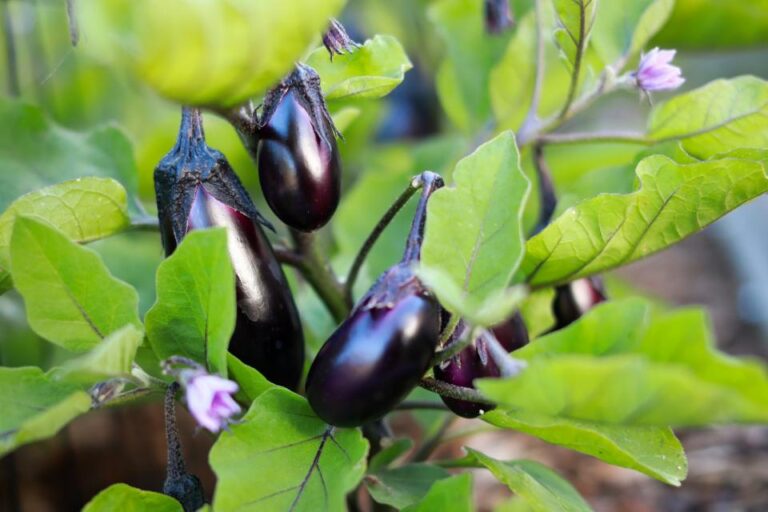
Eggplant flowers are usually purple, lavender, or white with yellow centers. Each flower contains both male and female parts, so a plant can set fruit without a second eggplant nearby. Wind, vibration, and visiting insects help move pollen within the flower.
Flowers may begin appearing several weeks after transplanting, but the exact timing varies widely. A plant that flowers indoors or while still very small may benefit from having the earliest blossoms removed so it can establish more leaf and root growth first.
How to tell whether a flower has set fruit
After successful pollination, the petals fade and drop while the small ovary behind the flower begins swelling. If the entire flower stem yellows and falls away, the blossom did not set fruit.
Why eggplant flowers drop
- Night temperatures that are too cool
- Very hot days or hot nights
- Irregular watering or drought stress
- Excess nitrogen producing leaves instead of fruit
- Insufficient sunlight
One or two dropped flowers are not necessarily a concern. Focus on overall plant health and whether new blossoms continue appearing. During calm weather, gently tapping the flower cluster or support stake can help release pollen, but it will not overcome severe heat, cold, or water stress.
Stage 6: Fruit Development and Ripening
After fruit set, the young eggplant enlarges quickly in warm weather. Its shape and final size depend on the variety: globe types become broad and oval, Asian types remain long and narrow, and compact varieties may produce much smaller fruit.
Do not use size alone to judge ripeness. A small-fruited variety can be ready while a globe eggplant of the same age is still immature.
Signs an eggplant is ready to harvest
- The fruit has reached the expected size for its variety.
- The skin is glossy rather than dull.
- The fruit feels firm with a slight give when pressed gently.
- A shallow thumb indentation springs back instead of remaining.
Cut the fruit with sharp pruners or a knife, leaving part of the stem attached. Do not twist or pull it from the plant. Many varieties have small prickles on the calyx, so gloves are useful.
Harvesting promptly encourages the plant to keep flowering and producing. Fruit left too long becomes dull, spongy, seedy, and potentially bitter.
How Long Does Eggplant Take to Grow?
Most seed packets list days to maturity from transplanting rather than from sowing the seed. Many garden varieties reach harvest roughly 65–80 days after transplanting. Add the six to eight weeks spent growing seedlings indoors, and the total seed-to-harvest period is often around 100–140 days.
Cool conditions can extend that timeline considerably. A plant set into cold soil may survive without making meaningful growth, while the same variety planted later into properly warmed soil can catch up quickly.
Why Is My Eggplant Growing Slowly?
| What you see | Likely cause | What to check |
|---|---|---|
| Healthy color but little growth | Cool soil or cool nights | Night temperature and recent weather |
| Pale leaves and weak growth | Nutrient shortage or damaged roots | Soil condition, drainage, and root health |
| Large leafy plant with few flowers | Too much nitrogen | Fertilizer history |
| Flowers fall without fruit | Temperature or moisture stress | Heat, cold nights, and watering consistency |
| Leaves covered in tiny holes | Flea beetles | Undersides of leaves and nearby insects |
| Lower leaves yellow and plant wilts | Possible root stress or disease | Soil moisture, drainage, and pattern of symptoms |
If the plant is green, upright, and still producing new leaves, slow development may simply reflect cool weather. If growth has stopped and symptoms are worsening, investigate water, roots, insects, and disease rather than adding fertilizer automatically.
Eggplant Growth Stage FAQs
How long after flowering does eggplant appear?
A successfully pollinated flower begins showing a swelling fruit soon after the petals fade. In warm, favorable conditions, the change can become noticeable within several days. Reaching harvest size takes longer and depends on the variety and weather.
How tall should an eggplant be before flowering?
There is no universal height because compact and full-size varieties grow differently. More useful signs are a sturdy branching plant, several sets of mature leaves, and active new growth. Very small stressed seedlings that flower early may not have enough structure to support fruit well.
Can eggplant flowers pollinate themselves?
Yes. Eggplant flowers are self-fertile. They do not require another variety nearby, although vibration from wind or insects helps pollen move within the flower.
Does eggplant keep producing after the first harvest?
Yes. A healthy plant can continue flowering and setting fruit through warm weather until cold conditions or frost end production. Regular harvesting prevents mature fruit from remaining on the plant and supports continued production.
Should I remove the first eggplant flower?
Remove very early flowers when the plant is still indoors, newly transplanted, or too small to support fruit. Once the plant is established and growing strongly, there is usually no need to remove healthy blossoms.
The Most Important Thing at Every Stage
Eggplant grows best when its environment stays warm and steady. Most disappointing plants are not failing because they missed a precise milestone. They are reacting to cold soil, poor light, irregular water, root disturbance, excessive nitrogen, or temperature stress during flowering.
Use the stages as checkpoints: warm the seed, light the seedling well, wait before transplanting, build a healthy leafy plant, protect flowers from stress, and harvest while the fruit is glossy. That approach is more reliable than counting days alone.
Continue exploring the Vegetables, Herbs & Edible Gardening hub, or compare compatible crops in Companion Plants for Eggplant.