Best Companion Plants for Eggplant—and What to Avoid
Quick answer: The best companion plants for eggplant are crops that share its warm-weather needs without crowding it. Practical choices include basil, parsley, bush beans, low-growing lettuce, radishes used early in the season, and flowering plants such as sweet alyssum or marigolds around the bed. Companion planting can improve space use and support beneficial insects, but it does not replace correct spacing, crop rotation, watering, or pest monitoring.
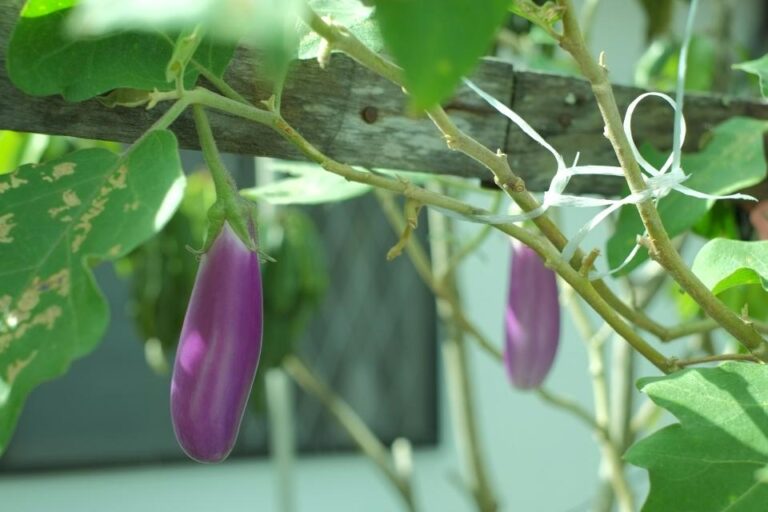
Eggplant needs warmth, full sun, fertile soil, steady moisture, and enough room for air to move through its leaves. That means the best companion is not simply a plant that appears on a traditional list. It must fit into the bed without stealing light, creating a dense humid canopy, or competing heavily for water and nutrients.
A useful eggplant companion does one of four things: fills empty space temporarily, stays low beneath the canopy, attracts beneficial insects nearby, or shares similar growing conditions without interfering with the main crop.
Best Eggplant Companion Plants at a Glance
| Companion | Why it can work | Where to place it | Main caution |
|---|---|---|---|
| Basil | Similar heat and moisture needs; flowers support pollinators and beneficial insects | Near the edge of the eggplant canopy | Do not crowd the stem or allow dense foliage to reduce airflow |
| Parsley | Compact and useful for filling space; flowers can support beneficial insects if allowed to bloom | Between widely spaced eggplants or along the bed edge | May need partial shade as eggplants enlarge |
| Bush beans | Warm-season crop with a different growth form | In a separate row beside eggplant | Do not assume they will “feed” eggplant with usable nitrogen during the season |
| Lettuce | Uses open space early and tolerates some later shade | North side or between young eggplants | Harvest before crowding and summer heat become problems |
| Radishes | Fast crop that can be harvested before eggplant fills the bed | Between transplant positions early in the season | Best as succession planting, not permanent underplanting |
| Sweet alyssum | Small flowers provide nectar and pollen for beneficial insects | Around the bed border | Prevent excessive reseeding if unwanted |
| Marigolds | Add flowers and may support beneficial insects | Along bed edges or corners | Interplanting does not reliably control root-knot nematodes |
| Thyme or oregano | Low-growing flowering herbs for dry bed edges | Outside the main irrigated root zone | They prefer drier conditions than eggplant |
What Companion Planting Can—and Cannot—Do
Companion planting includes several different practices that are often mixed together:
- Intercropping: Growing two crops together to use space, light, or time more efficiently.
- Succession planting: Harvesting a fast or cool-season crop before eggplant needs the space.
- Insectary planting: Adding flowers that feed pollinators, predators, and parasitoids.
- Trap cropping: Using a more attractive plant to draw a particular pest away under a planned management system.
These are more realistic than claims that one strongly scented herb will create an invisible shield around eggplant or that a neighboring plant will automatically improve fruit flavor. Results depend on plant density, timing, pest species, weather, and how the whole bed is managed.
Basil
Basil is one of the easiest plants to place near eggplant because both prefer warm weather, sun, and consistent moisture. A few basil plants can occupy open spaces around widely spaced eggplants without becoming a major competitor.
The strongest practical value comes when some basil is allowed to flower. Its blooms provide food for bees and small beneficial insects. Eggplant flowers are self-fertile, so basil is not required for fruit set, but a flower-rich garden supports a more diverse insect community.
- Place basil about 12 inches or more from the eggplant stem.
- Harvest it regularly so it does not form a dense wall of foliage.
- Allow one or two plants to bloom if insect support matters more than maximum leaf production.
Parsley and Cilantro
Parsley can fit beneath or beside eggplant because it stays relatively compact. The University of Maryland Extension uses parsley interplanted with eggplant as an example of maximizing space while both crops still receive what they need.
Cilantro is more useful as an early or late-season companion because it struggles in midsummer heat. Plant it before eggplant becomes large, harvest the leaves, and allow selected plants to flower. The small flowers are accessible to many beneficial insects.
Bush Beans
Bush beans and eggplant can share a warm-season bed when each crop receives its normal spacing. Beans stay lower than eggplant and can occupy an adjacent row without climbing through the eggplant canopy.
Legumes form relationships with nitrogen-fixing bacteria, but most of that nitrogen supports the bean plant itself while it is growing. Do not reduce eggplant fertility simply because beans are nearby. Any nitrogen benefit to a following crop is more relevant after legume residues and roots break down.
Avoid pole beans on a structure that shades eggplant. Eggplant is a full-sun crop and reduced light can lower flowering and fruit production.
Lettuce and Other Low Greens
Lettuce is useful as a timing companion rather than a permanent partner. It can grow in the open soil around young transplants and be harvested as the eggplant canopy expands and summer temperatures rise.
Plant low greens on the north side of eggplant or between plants while the bed is still open. This avoids placing a tall crop where it will cast additional shade. Remove the greens if they begin crowding stems, restricting airflow, or requiring much more frequent watering than the eggplant bed.
Radishes and Fast Early Crops
Radishes mature quickly enough to use the space before eggplant needs it. Sow them between future transplant positions or in a narrow row along the bed. In many climates, they will be harvested before warm weather pushes them to bolt.
Radish can also attract some flea beetles, but that does not automatically protect eggplant. A true trap-crop program requires earlier planting, monitoring, and management of the beetles on the trap crop. Simply adding a few radishes and ignoring them may increase the number of flea beetles present rather than solve the problem.
Sweet Alyssum and Other Insectary Flowers
Small clustered flowers are particularly useful near vegetable beds because they offer accessible nectar and pollen to tiny wasps, flies, and other beneficial insects. Sweet alyssum is compact enough to grow along the bed edge without heavily shading eggplant.
Other options include dill, cilantro, basil, buckwheat, anise hyssop, and mountain mint, depending on available space. Tall or spreading plants are usually better placed around the bed rather than directly between eggplants.
Marigolds
Marigolds are attractive border flowers that bloom through warm weather and provide resources for pollinators and beneficial insects. They can be planted at the ends of rows or around the perimeter without interfering with eggplant harvest.
The common claim that one marigold beside each vegetable controls root-knot nematodes is misleading. Certain French and African marigolds can suppress specific nematodes when grown densely as a cover crop for months. Penn State Extension notes that interplanting marigolds does not reduce root-knot nematode populations in the same way.
Grow marigolds because they fit the bed and add flower diversity—not as a guaranteed cure for every pest.
Plants to Keep Away From Eggplant
There is little evidence for many traditional “enemy plant” lists. The more useful rule is to avoid plants that create practical conflicts.
| Plant or situation | Why it can be a problem |
|---|---|
| Tall corn or pole beans on the sunny side | Can shade eggplant and reduce flowering |
| Pumpkins and large squash planted too close | Vines can cover the root zone and make inspection and harvest difficult |
| Fennel in a tight vegetable bed | Large mature plants consume space and can shade smaller crops; use a separate area |
| Potatoes, tomatoes, and peppers crowded together | Share several pests and diseases and can create a dense nightshade block |
| Aggressive mint planted in the ground | Spreads through the bed and competes with vegetables |
| Any dense underplanting against the stem | Reduces airflow, hides pests, and complicates watering and harvest |
Can Eggplant Grow Beside Tomatoes and Peppers?
Yes, they can grow beside one another because they share similar heat and sun requirements. The drawback is that eggplant, tomato, pepper, and potato all belong to the nightshade family. They can share pests such as flea beetles and Colorado potato beetles, along with some soilborne diseases.
In a small home garden, separating every related crop may not be possible. Give them adequate spacing, inspect the group frequently, remove diseased debris, and rotate the entire nightshade family to a different bed when space allows.
A Practical 4-by-8-Foot Eggplant Bed Layout
For a simple mixed bed, place four standard eggplants in two offset rows with roughly 24 inches between plant centers. Adjust for the mature width listed on the seed packet or plant label.
- Plant basil or parsley between the eggplants, but not directly against their stems.
- Sow radishes or lettuce in open spaces early, then harvest them before the eggplants fill out.
- Place sweet alyssum or compact marigolds along the outside edge.
- Keep the southern edge free of tall plants in the Northern Hemisphere so eggplant receives maximum sun.
- Install stakes or cages at transplanting time before neighboring plants make access difficult.
For the eggplant’s full seasonal timeline and support needs, see Eggplant Growth Stages: Timeline From Seed to Harvest.
Spacing Matters More Than the Companion List
Eggplant commonly needs about 18–24 inches between plants, with larger varieties requiring more. Follow the variety’s mature size rather than squeezing in additional crops because an online chart labels them “compatible.”
- Keep several inches of open space around the main stem.
- Do not allow companion plants to block irrigation water from reaching the eggplant root zone.
- Thin or harvest companions as the eggplant canopy grows.
- Leave paths and access for checking leaf undersides and harvesting fruit.
Companion Planting Will Not Replace Flea Beetle Control
Flea beetles are among the most important eggplant pests, especially on small transplants. Their feeding creates many tiny “shot holes” in leaves. A heavily damaged young plant can be slowed before companion plants provide any meaningful help.
Use proven controls first:
- Plant healthy transplants after conditions have warmed.
- Use row cover or insect screening over hoops before beetles arrive.
- Remove covers when flowers appear so pollinating insects can reach the plants and heat does not build excessively.
- Rotate eggplant away from previous nightshade plantings where practical.
- Inspect leaves frequently while plants are small.
Flowers around the bed may support natural enemies, but they should be part of an integrated approach rather than the only pest plan.
Common Companion-Planting Mistakes
- Planting too densely: More species do not automatically create a healthier bed.
- Ignoring mature size: A tiny transplant may become a three-foot-wide plant.
- Mixing incompatible water needs: Mediterranean herbs may struggle in the consistently moist soil eggplant prefers.
- Expecting scent alone to stop pests: Pest suppression is rarely complete or reliable from one aromatic plant.
- Using companions instead of rotation: Related nightshades still share pests and diseases.
- Blocking access: A bed that cannot be inspected or harvested easily will be neglected.
Frequently Asked Questions
What is the single best companion plant for eggplant?
There is no universal best choice. Basil or parsley is practical in many home gardens because each stays manageable and shares compatible growing conditions. A flowering border may provide more ecological value than placing one herb beside every eggplant.
Can I plant marigolds beside eggplant?
Yes. Use them as compact flowers around the bed. They can support insect diversity, but ordinary interplanting should not be presented as reliable nematode control.
Can eggplant and beans grow together?
Yes, especially bush beans in an adjacent row. Keep enough distance for airflow and do not let climbing beans shade the eggplant.
Can I grow spinach under eggplant in summer?
True spinach is a cool-season crop and usually bolts in summer heat. It is more practical to grow spinach before eggplant fills the bed, then harvest it as warm weather arrives. Heat-tolerant leafy greens are better summer options in hot climates.
Should eggplant be planted near potatoes?
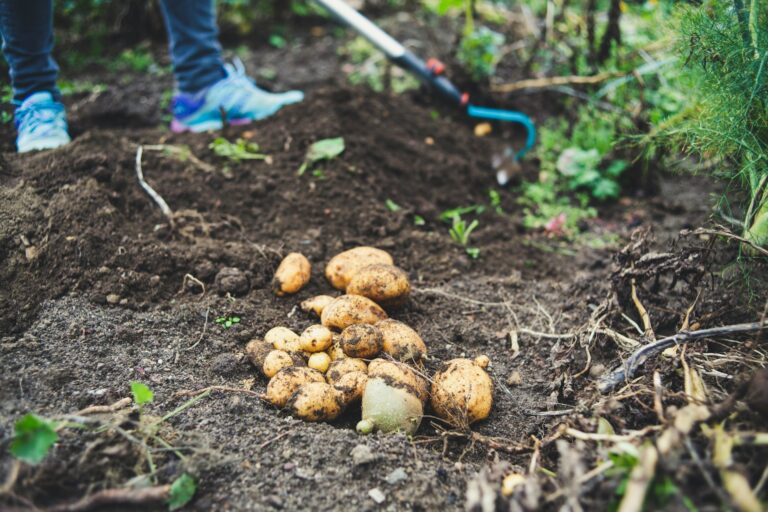
They can grow in the same garden, but placing them together concentrates nightshade-family pests and diseases. Separate them when possible and rotate both crops away from previous nightshade beds.
The Best Approach
Build the bed around eggplant’s needs first: full sun, warm soil, adequate spacing, steady moisture, support, and regular pest inspection. Then use companion plants to fill temporary space, add flowers, or diversify the harvest without compromising those basics.
A simple combination of properly spaced eggplants, a few basil or parsley plants, early radishes or lettuce, and a flowering border is more useful than a crowded bed built from a long compatibility chart.
Continue exploring the Vegetables, Herbs & Edible Gardening hub, and review Watering 101 before planning a densely planted bed.