Best Companion Plants for Basil—and What to Avoid
Quick answer: The most practical companion plants for basil are tomatoes, peppers, eggplant, parsley, lettuce, and flowering plants that attract beneficial insects. Basil also works well near many warm-season vegetables because it likes full sun, warm soil, regular moisture, and fertile, well-drained soil. The best-supported pairing is basil with tomatoes, where research suggests basil can reduce some pest activity. Still, basil is not a universal pest repellent, and good spacing, watering, crop rotation, and pest scouting matter more than any companion chart.
Basil appears on almost every companion-planting list, but many of the claims attached to it go too far. It does not automatically make neighboring vegetables taste better, eliminate aphids, or protect an entire bed simply because its leaves smell strong.
There are still good reasons to grow basil among vegetables. It is compact, productive, compatible with many warm-season crops, useful in the kitchen, and valuable to pollinators when allowed to flower. In some crop combinations—especially tomatoes—there is also research showing measurable pest-management benefits.
Best Basil Companion Plants at a Glance
| Companion | Why it works | Best placement | Main caution |
|---|---|---|---|
| Tomatoes | Similar warm-season needs; research supports some reduction in tomato pests | Between or beside well-spaced tomatoes | Do not overcrowd the tomato base |
| Peppers | Similar sun, heat, soil, and moisture requirements | Between widely spaced pepper plants | Maintain airflow around pepper foliage |
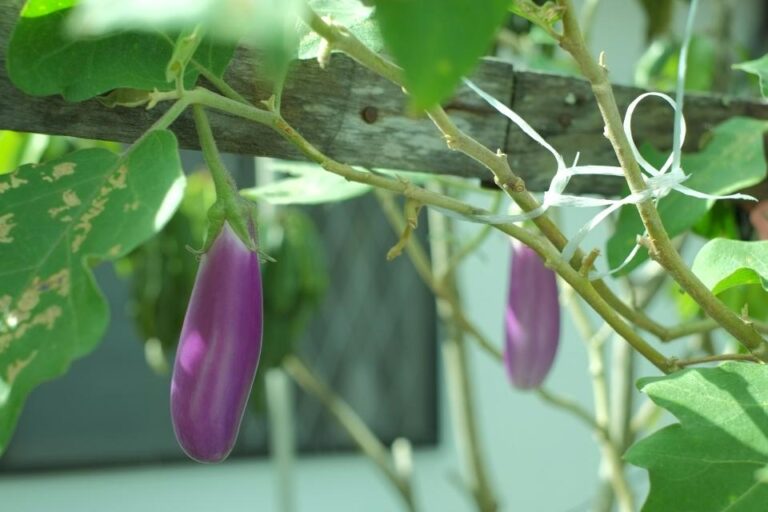
| Eggplant | Compatible heat and watering needs | Bed edge or between large plants where room allows | Eggplant needs substantial space as it matures |
| Parsley | Compact herb with compatible moisture needs | Alongside basil or larger vegetables | Parsley tolerates cooler conditions better than basil |
| Lettuce | Can use space before basil becomes large | Early-season gaps or slightly shaded edge | Usually declines in summer heat |
| Sweet alyssum | Provides nectar and pollen for beneficial insects | Bed border | May reseed freely |
| Marigolds | Add flower diversity and beneficial-insect resources | Ends and borders of vegetable beds | Not a guaranteed pest cure |
| Oregano or thyme | Flowering herbs support beneficial insects | Drier outer edge of the bed | Prefer less water than basil |
What Basil Actually Needs
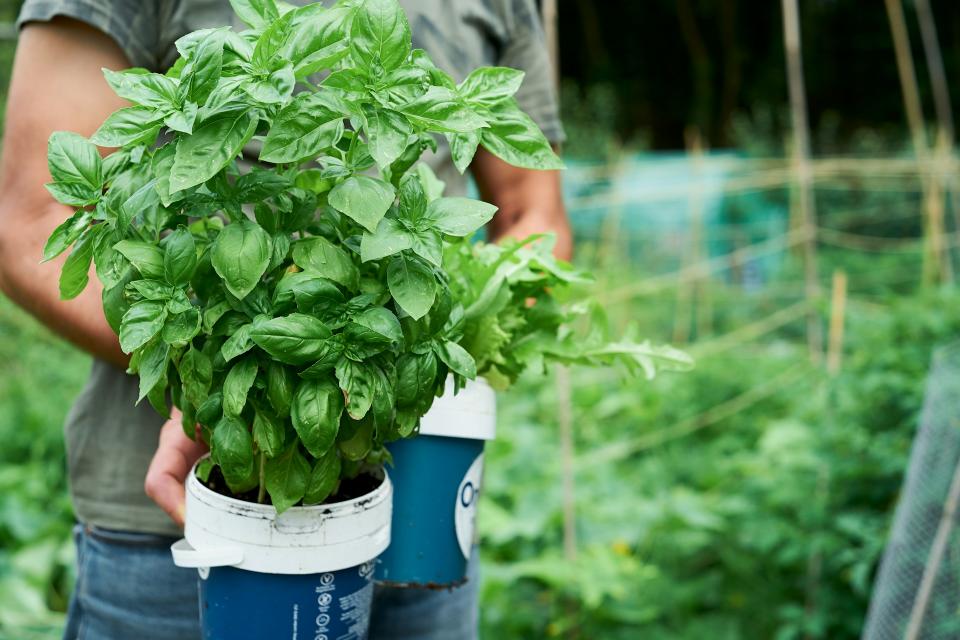
Basil is a frost-sensitive annual that grows best after weather has warmed. It prefers full sun, fertile well-drained soil, and consistent moisture. Most sweet basil plants also need enough room for airflow rather than being packed tightly among vegetables.
A useful spacing range for many garden basils is roughly 12–18 inches apart, although compact varieties can be closer and large cultivars may need more. Penn State Extension recommends 12–18 inches for good airflow.
This matters for companion planting because basil should not be treated as filler for every empty inch. A crowded basil plant is more prone to weak growth and foliar disease, and a crowded vegetable bed becomes harder to water and inspect.
Tomatoes: The Best-Supported Basil Companion
Tomatoes and basil are a classic pairing for practical reasons. Both prefer warm conditions, fertile soil, full sun, and regular watering. Basil also remains low enough to fit around supported tomato plants without becoming a major source of shade.
More importantly, this pairing has better research support than many traditional companion combinations. University of Minnesota Extension notes that studies have found basil can reduce thrip populations in tomatoes. Penn State also reports that basil can interfere with host-finding by thrips and reduce egg-laying behavior by some tomato-feeding moths.
That does not mean basil creates complete protection from tomato hornworms, whiteflies, or aphids. Think of it as one tool that may reduce pest pressure within a broader pest-management plan.
How to plant basil with tomatoes
- Give the tomato its normal mature spacing first.
- Place basil roughly 12 inches or more from the tomato stem where space allows.
- Keep basil outside the densest part of the tomato canopy.
- Harvest basil regularly to maintain a compact plant.
- Leave one or two stems to flower later if you want to support pollinators and beneficial insects.
There is little reason to plant two or three basil plants around every tomato if doing so creates a crowded bed. One healthy basil plant with good airflow is more useful than several stressed plants.
Peppers
Peppers are another easy fit because their growing requirements overlap strongly with basil. Both prefer warm weather, plenty of sun, and regular moisture.
University of Maryland Extension specifically shows basil interplanted beneath and beside pepper plants as an example of using space efficiently. This is a good example of companion planting based on compatible growth habits rather than folklore.
Keep enough open space around pepper stems to allow airflow and easy inspection. Basil should occupy unused ground, not form a thick layer beneath every pepper plant.
Eggplant
Basil and eggplant share warm-season conditions and can be grown together when the bed is large enough. Eggplant becomes much larger than basil, so spacing should be based on the mature eggplant canopy first.
Basil can be placed toward the edge of the eggplant root zone or between widely spaced plants. If the eggplant begins shading it heavily, harvest or move the basil rather than forcing it to remain in poor light.
For a full layout, see Best Companion Plants for Eggplant.
Parsley, Cilantro, and Other Herbs
Parsley fits well near basil because both can be harvested repeatedly and neither becomes extremely large. Their seasonal preferences are not identical—parsley handles cool conditions much better—so they may overlap only during part of the year.
Cilantro is best viewed as an early- or late-season neighbor. In hot weather it bolts quickly, but allowing some cilantro to flower can provide nectar and pollen for beneficial insects.
Oregano, thyme, rosemary, and sage can also share a garden area with basil, but they generally prefer drier conditions once established. Rather than putting them on the same irrigation emitter, place them toward the drier edge of the bed.
Lettuce and Fast Early Crops
Lettuce is useful before basil reaches full size. It can occupy open spaces in spring, then be harvested as temperatures rise and basil begins growing rapidly.
This is succession planting more than a long-term companion relationship, and it is often more productive than trying to keep cool-season lettuce alive beneath basil through midsummer.
Radishes can be used the same way. Sow them early, harvest them quickly, and let basil take over the space later.
Flowering Basil Is Valuable in the Garden
If your goal is maximum leaf harvest, pinching flower buds keeps basil producing tender foliage longer. But there is no need to prevent every plant from blooming.
University of Maryland Extension recommends allowing herbs such as basil, cilantro, and dill to flower because their blooms attract pollinators and natural enemies of garden pests. Penn State also notes that basil flowers attract bees, butterflies, and other pollinators.
A practical compromise is to keep most plants pinched for kitchen use while allowing one or two healthy plants to flower at the edge of the bed.
Sweet Alyssum and Marigolds
Sweet alyssum is useful near basil because it stays low and produces many small flowers. These flowers provide food for beneficial insects without taking much vertical space.
Marigolds are also useful as warm-season border plants. Their main value is flower diversity and insect habitat. Avoid treating them as a universal insect or nematode treatment; results depend on the marigold species, target pest, planting density, and management method.
What Should You Not Plant With Basil?
Most “bad companion” lists are much more certain than the evidence supports. There is no need to create rigid exclusion zones around basil. Instead, avoid combinations that conflict in water, light, space, or disease management.
| Plant or situation | Why it can be a poor fit |
|---|---|
| Large squash or pumpkins planted too close | Vines can overwhelm basil and make harvesting difficult |
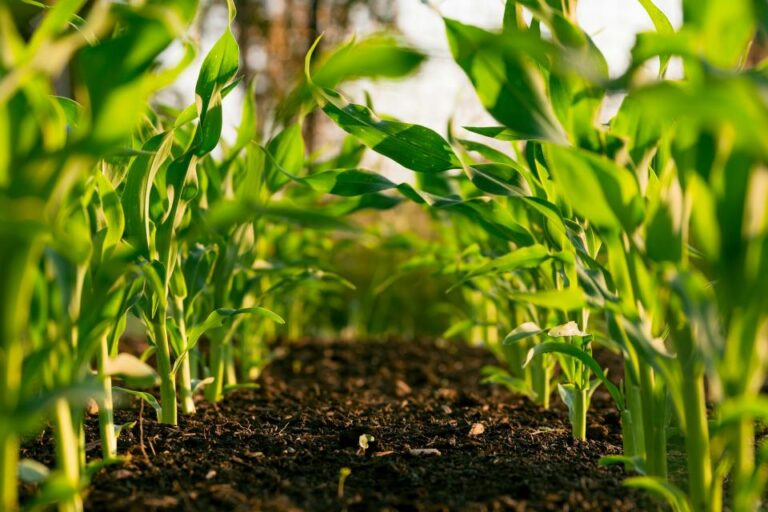
| Tall corn immediately south of basil | Can create excessive shade |
| Mature rosemary or lavender on the same heavy irrigation schedule | Prefer drier soil than basil |
| Mint planted directly in the bed | Can spread aggressively and crowd basil |
| Any dense vegetable canopy | Reduces light and airflow |
| Diseased basil or related herbs left in place | Can increase local disease pressure |
Does Basil Repel Mosquitoes, Aphids, or Flies?
Basil contains aromatic compounds that can affect insect behavior, but growing a basil plant nearby is not the same as applying a tested repellent product.
Research-backed companion effects are usually specific. For example, basil has shown useful effects against thrips and some egg-laying moths in tomato systems. That evidence should not be stretched into a claim that basil repels every pest in the garden.
If aphids, whiteflies, mites, beetles, or caterpillars are already damaging plants, identify the pest and use an appropriate control rather than adding more basil and hoping the scent solves the problem.
Does Basil Improve Tomato Flavor?
The idea that basil planted beside tomatoes improves their flavor is one of the most repeated companion-planting claims. There is not strong evidence that simply growing the two plants together changes the taste of the tomato fruit in a predictable way.
The pairing still makes sense: the plants have compatible cultural needs, there is some pest-management evidence, and the two crops are useful together in the kitchen. Those practical benefits are enough without promising a flavor effect.
A Practical Basil Companion Bed
For a 4-by-8-foot summer bed, keep the layout simple:
- Place tomatoes, peppers, or eggplants according to their full mature spacing.
- Add basil in open spaces about 12 inches or more from the larger crop stems.
- Use lettuce or radishes early in gaps that will later be occupied by expanding warm-season plants.
- Plant sweet alyssum or marigolds along the perimeter.
- Keep at least one edge open for watering, harvesting, and pest inspection.
The goal is not to fill every square inch. The goal is to use otherwise empty space without reducing airflow or making the main crop harder to manage.
Common Basil Companion-Planting Mistakes
- Planting too closely: Basil still needs its own root and leaf space.
- Believing every pest-repellent claim: Research tends to support specific crop-pest combinations, not universal protection.
- Keeping all basil from flowering: Flowering plants can support beneficial insects.
- Ignoring water differences: Basil needs more regular moisture than Mediterranean herbs such as rosemary and lavender.
- Using basil instead of crop rotation: Companion planting does not prevent soilborne disease buildup.
- Letting larger crops bury it in shade: Basil needs strong light for compact, productive growth.
Frequently Asked Questions
What is the best companion plant for basil?
Tomato is the best-supported choice because the plants have compatible growing requirements and research suggests basil can reduce some tomato pest activity. Peppers and eggplant are also easy practical companions.
Can basil and tomatoes be planted in the same container?
Yes, but only in a container large enough for the tomato’s root system. The tomato should determine the pot size. Basil can use some of the remaining surface area without replacing the root volume the tomato needs.
How close should basil be planted to tomatoes?
About 12 inches is a reasonable starting point where the bed has enough room. More important than an exact number is keeping the basil outside the tomato’s crowded stem area and maintaining airflow.
Should basil be allowed to flower?
Pinch most plants if leaf production is your priority, but allowing one or two plants to flower provides nectar and pollen for bees and other beneficial insects.
Can basil grow with peppers?
Yes. Both prefer warm, sunny conditions and consistent moisture. University of Maryland Extension specifically uses basil interplanted with peppers as an example of space-efficient companion planting.
The Best Approach
Use basil as a productive herb first and a companion plant second. Put it beside crops that share its growing conditions, maintain enough spacing for healthy leaves, and let some plants flower when insect diversity is useful.
Tomatoes, peppers, and eggplant are the easiest warm-season partners. Lettuce and radishes are useful before the bed fills in, while flowering borders such as sweet alyssum add insect resources without competing heavily for space.
Continue with the Vegetables, Herbs & Edible Gardening hub, or compare another warm-season combination in Best Companion Plants for Okra.