Black and Orange Flowers for a Halloween Garden
Quick answer: For a Halloween flower palette, pair orange calendula, marigolds, nasturtiums, zinnias, or orange dahlias with flowers that read as black or nearly black, such as very dark dahlias, pansies, violas, petunias, and hollyhocks. Truly black flowers are rare, so the strongest “black” effect usually comes from deep burgundy, purple, or chocolate-colored blooms placed beside bright orange flowers.
Black and orange is the obvious Halloween color combination, but getting it from living plants is more interesting than simply adding orange pumpkins and black plastic decorations. A garden built around dark flowers, orange blooms, and a few deep-purple foliage plants can look seasonal without becoming a temporary display.
The trick is to use orange as the bright accent and near-black flowers as the contrast. If every plant is dark, the bed can disappear visually. If everything is orange, it starts to look like a generic fall planting rather than a Halloween garden.
Best Black and Orange Flowers for Halloween
| Flower | Color effect | Best use |
|---|---|---|
| Dark dahlias | Deep burgundy to near-black | Focal flowers and cut arrangements |
| Orange dahlias | Rich orange | Late-summer and fall borders |
| Black pansies or violas | Very dark purple-black | Cool-season containers and edging |
| Orange pansies | Clear orange | Fall containers |
| Black petunias | Near-black velvety flowers | Containers and hanging baskets |
| Orange calendula | Bright pumpkin orange | Borders, containers, cut flowers |
| Orange nasturtiums | Fiery orange | Trailing containers and edible gardens |
| Dark hollyhocks | Maroon to almost black | Tall background planting |
| Orange zinnias | Strong orange | Sunny beds and cutting gardens |
| Dark chrysanthemums | Burgundy, wine, deep purple | Classic fall containers |
1. Dark Dahlias
Dahlias are one of the best Halloween flowers because they naturally bloom from summer into autumn, often continuing until the first frost. The Royal Horticultural Society notes that dahlias are especially valuable for late-season color and are available in a huge range of flower forms and shades.
The darkest cultivars are not literally black. Most are deep burgundy, wine red, or purple-red, but in evening light they can look almost black. That makes them ideal beside orange flowers, pumpkins, or dark foliage.
Use one or two dark dahlias as focal points rather than trying to fill an entire bed with them. Their large flowers have more impact when surrounded by simpler plants.
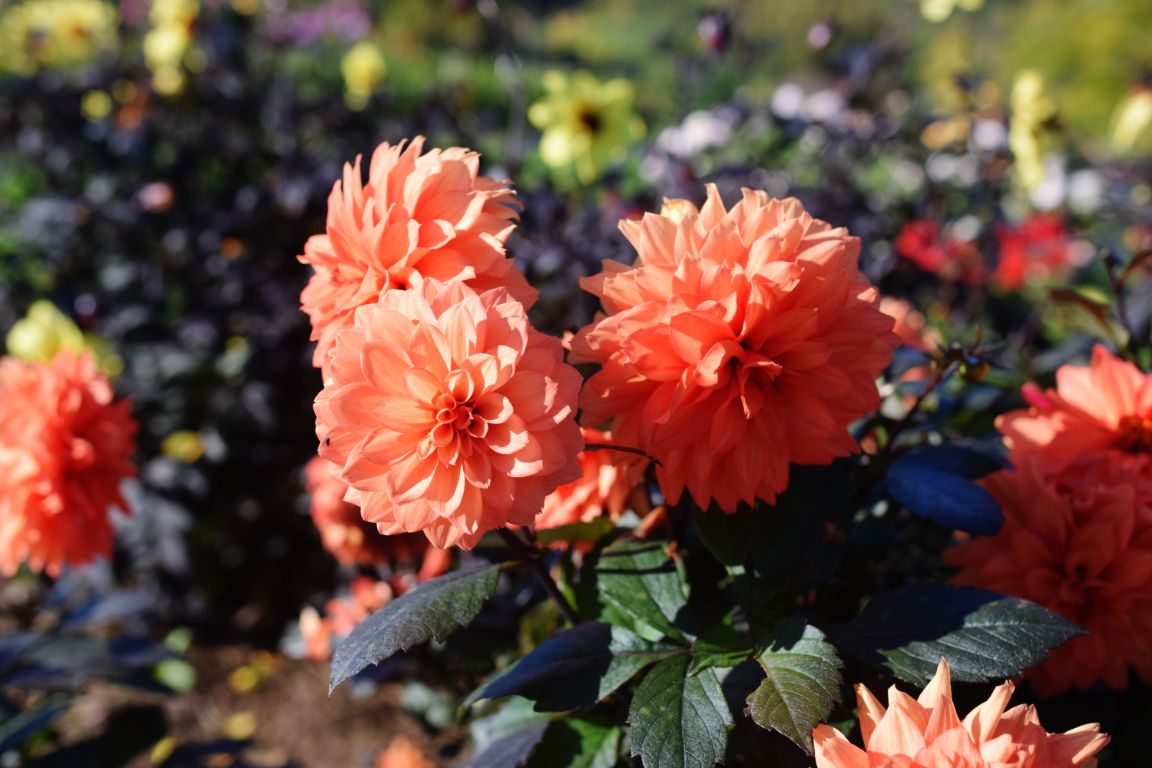
2. Orange Dahlias
Orange dahlias give you the opposite side of the Halloween palette while keeping the same long flowering season. RHS plant profiles include compact dark-leaved orange cultivars such as the Lubega Dark series, which combines orange flowers with bronze to dark-green foliage.
That kind of plant does much of the color work by itself: dark leaves underneath, bright orange flowers above.
For a cleaner look, pair orange dahlias with one dark-leaved plant and avoid adding too many other flower colors around them.
3. Black Pansies and Violas
Very dark pansies and violas are some of the easiest “black flower” options for fall containers. Their flowers are usually extremely dark purple rather than true black, but from a normal viewing distance the effect is convincing.
They also suit Halloween timing better than many summer flowers because pansies and violas prefer cooler conditions. In regions with mild autumn weather, they can continue flowering after warm-season annuals have started fading.
Use them at the front of planters with orange pansies, ornamental kale, or small pumpkins.
4. Black Petunias
Dark petunia cultivars can produce some of the deepest flower colors available in common garden centers. Their velvety petals often look black in shade and very dark purple in brighter light.
They work particularly well in pots and hanging baskets, where the dark flowers can be viewed up close. Pair them with orange calibrachoa, orange pansies, or orange foliage accents rather than mixing them into a heavily multicolored basket.
Petunias are warm-season plants, so their usefulness at Halloween depends on your climate. In colder regions, frost may finish them before late October.
5. Orange Calendula
Calendula is one of the most practical orange flowers for this theme. RHS describes calendula as an easy-to-grow hardy annual with orange, yellow, cream, or pale-orange flowers that can continue from summer into early autumn.
Cultivars such as ‘Orange King’ produce strong double orange flowers and can keep flowering until hard frost in suitable conditions.
Calendula is especially useful if you want a Halloween garden that still feels like a real garden rather than a themed display. It also works in cut arrangements and has edible petals.
6. Orange Nasturtiums
Nasturtiums bring two useful features: bright orange flowers and a trailing habit. That makes them good for spilling over the edge of a porch planter, raised bed, or hanging container.
The flowers and leaves are edible, so they also fit an edible Halloween garden. Their round leaves provide a softer contrast to sharp grasses, dark foliage, or spiky decorations.
Like petunias, nasturtiums are frost-sensitive, so they are most reliable for Halloween where autumn remains relatively mild.
7. Dark Hollyhocks
Dark hollyhocks can produce tall spikes of deep maroon flowers that appear almost black. They are especially effective against a fence, shed, or wall because the height gives the garden a more dramatic silhouette.
The limitation is timing. Hollyhocks generally peak earlier than October in many climates, so they are better as part of a broader gothic garden than as a guaranteed late-October flower.
If your growing season supports late blooms, the color works beautifully with orange dahlias or calendula planted in front.
8. Orange Zinnias
Zinnias provide intense orange without looking overly formal. They bloom heavily in warm, sunny conditions and can continue into fall until frost.
They are especially useful in a cutting garden where you want enough flowers for Halloween arrangements as well as the outdoor display.
For a Halloween palette, avoid mixing every zinnia color together. Choose orange or burnt-orange varieties and combine them with dark foliage or dark flowers nearby.
9. Dark Chrysanthemums
Chrysanthemums are one of the most dependable ways to get flowers around Halloween because they are naturally associated with autumn. Deep burgundy, plum, wine, and dark-purple cultivars can provide the “black” side of the palette even if they are not genuinely black.
They are especially useful for porch pots because they are widely available already in bloom in fall. That makes them a practical choice if you are building the display late rather than planning months ahead.
10. Orange Marigolds
Orange marigolds are simple, inexpensive, and instantly recognizable. Their warm orange and gold flowers fit both Halloween and general autumn decorating.
They work best as a supporting flower rather than the entire design. A mass of orange marigolds beside a dark container, dark foliage, or a few purple-black flowers creates a stronger Halloween effect than marigolds alone.
Are There Any Truly Black Flowers?
Very few garden flowers are genuinely black. What nurseries call “black” is usually an extremely dark shade of purple, red, burgundy, or chocolate brown.
That is not a problem for garden design. Human vision reads those very dark colors as black when they are placed beside something much brighter, especially orange, white, silver, or lime green.
Instead of chasing literal black, choose the darkest cultivar you can find and strengthen the effect with contrast.
Best Orange Flowers That Still Look Good in Fall
If your main concern is having orange flowers still present around Halloween, prioritize plants with late bloom periods or cool-season performance.
- Dahlias: often flower until first frost
- Calendula: can continue into early autumn and tolerate cool weather
- Chrysanthemums: naturally peak in fall
- Pansies: excellent for cooler fall conditions
- Zinnias: continue until frost in warm autumns
- Marigolds: often flower until frost if regularly deadheaded
The exact choice depends on your first-frost date. A plant that looks perfect on October 31 in a mild climate may already be finished in a colder garden.
A Simple Black-and-Orange Halloween Container
You do not need a large flower bed to use this palette. One large container can create a strong Halloween focal point.
- Tall element: dark-leaved ornamental grass or a compact dark dahlia
- Orange flower: calendula, orange pansy, or compact orange chrysanthemum
- Dark flower: black pansy or viola
- Trailing element: orange nasturtium in mild weather
- Finishing accent: one small white or orange pumpkin at the base
Keep the container itself neutral—black, charcoal, aged terracotta, or galvanized metal—so the plants remain the focus.
How to Use Black and Orange Without Making the Garden Too Busy
A good rule is to let one color dominate and use the other as an accent. For example, a mostly dark-purple planting with several bright orange flowers looks more intentional than equal amounts of every color scattered through the bed.
- Repeat the same orange flower in two or three places
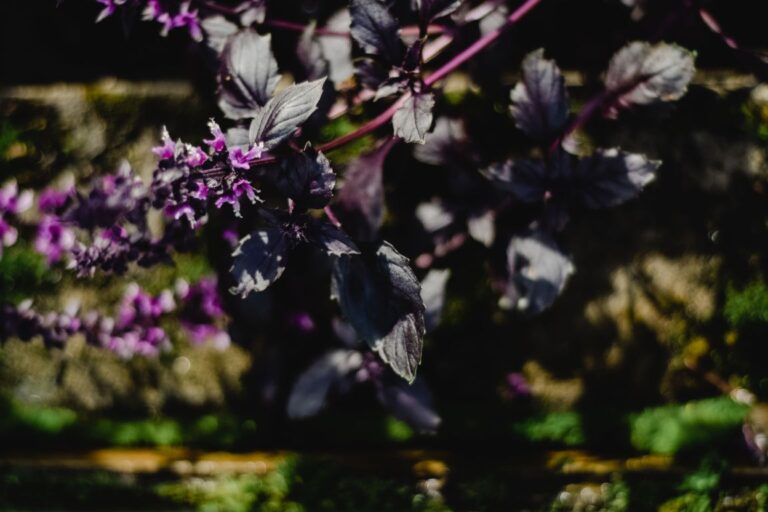
- Use dark foliage to connect separate dark flowers
- Add white or silver only if the design needs contrast
- Avoid mixing bright pink, blue, red, yellow, and orange into the same Halloween planting
- Use pumpkins and decorations after the flower palette is established
What to Plant Now vs. What to Plan for Next Year
If Halloween is only a few weeks away, do not expect newly sown summer annuals to create a full display. Use plants already in bloom from local nurseries—especially pansies, violas, chrysanthemums, ornamental kale, and any remaining dahlias suitable for your climate.
For next year, plan earlier for dahlias, zinnias, marigolds, petunias, nasturtiums, and dark-leaved perennials so the garden develops naturally through the season.
Pair Flowers With Existing Halloween Garden Features
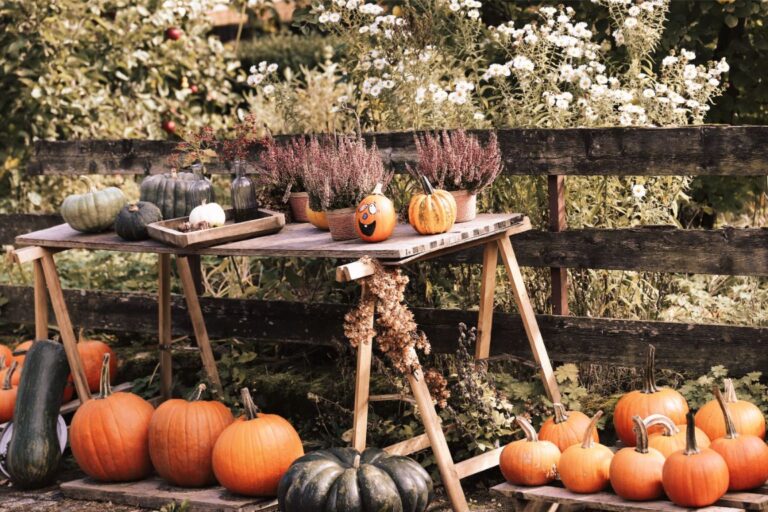
Once the flowers are planted, keep the decoration layer simple. Orange and black flowers already establish the theme, so a few pumpkins, pathway lights, or a single focal prop may be enough.
For the broader display, see our Halloween Garden Decorations guide. If you are hosting outdoors, our Halloween Garden Party Ideas guide covers lighting, layout, food stations, and guest planning.
Frequently Asked Questions
What is the blackest flower for a Halloween garden?
Very dark pansies, petunias, and certain dahlias can appear nearly black, although botanically they are usually deep purple, burgundy, or red rather than true black.
What orange flowers bloom around Halloween?
Depending on climate, good options include chrysanthemums, calendula, pansies, dahlias, zinnias, and marigolds. In frost-free or mild areas, nasturtiums may also still be flowering.
Can I make a Halloween flower garden in pots?
Yes. Containers are often easier because you can combine a dark flower, an orange flower, dark foliage, and a small pumpkin in a single focal arrangement.
What flowers go well with pumpkins?
Dark pansies, deep burgundy chrysanthemums, calendula, orange dahlias, ornamental kale, and dark foliage plants all work well around pumpkins without competing with their shape.
The Practical Bottom Line
You do not need flowers that are literally black to create a convincing black-and-orange Halloween garden. Use the darkest burgundy or purple flowers you can find, then place them beside clear orange blooms so the contrast does the work.
For the most reliable late-season combination, start with dark pansies or chrysanthemums, add orange pansies, calendula, or mums, and use dark foliage or a pumpkin to tie the whole planting together.