Best Plants for a Halloween Garden: 10 Spooky Picks
Quick answer: The best plants for a Halloween garden are those with naturally dark foliage, near-black flowers, orange blooms or fruit, unusual shapes, and dramatic autumn texture. Good choices include black mondo grass, dark-leaved heuchera, purple basil, black or deep-red dahlias, ornamental peppers, pumpkins, ornamental kale, and a few genuinely strange-looking plants such as bat flower or “doll’s eyes” where climate and safety allow.
A Halloween garden does not have to look like a temporary yard display. With the right plants, you can build a garden that feels moody, autumnal, and slightly eerie before you add a single pumpkin, lantern, skeleton, or string light.
The easiest way to make it work is to combine three visual ingredients: dark foliage, orange or purple color, and unusual plant shapes. Then use your existing Halloween decorations as accents rather than the whole design.
Best Halloween Garden Plants at a Glance
| Plant | Halloween effect | Best use |
|---|---|---|
| Black mondo grass | Near-black foliage | Edging, containers, dark groundcover |
| Heuchera ‘Obsidian’ or other dark cultivars | Glossy dark foliage | Containers and shady borders |
| Purple basil | Deep purple edible foliage | Pots, herb beds, table planters |
| Dark dahlias | Black-red dramatic flowers | Focal points and cut flowers |
| Ornamental peppers | Orange, red, purple, or nearly black fruit | Containers and porch displays |
| Pumpkins | Classic orange fruit | Garden beds, entrances, harvest displays |
| Ornamental kale | Purple, white, and green rosettes | Cool-weather containers |
| Black elder | Deep purple-black foliage | Large permanent backdrop |
| Bat flower | Dark, wing-like blooms | Warm-climate or indoor feature plant |
| White baneberry | White “eye-like” berries | Woodland-style spooky planting |
1. Black Mondo Grass
Few garden plants look genuinely black, which is why black mondo grass (Ophiopogon planiscapus ‘Nigrescens’) is such a strong Halloween choice. Its narrow, arching leaves are black to purple-black, creating a dark base that makes orange pumpkins, pale flowers, and pathway lights stand out.
It works especially well along the edge of a walkway, around a porch planter, or in a container where the foliage can spill visually around brighter seasonal plants.
2. Dark-Leaved Heuchera
Dark heucheras are one of the easiest ways to add black-purple foliage without relying on flowers. Cultivars such as ‘Obsidian’ develop glossy, very dark leaves that stay visually strong even after surrounding summer flowers begin fading.
Use them in partly shaded beds, porch containers, or under shrubs where their leaf color can provide a permanent moody layer. Pairing dark heuchera with pale ornamental grasses, white pumpkins, or orange flowers creates a strong Halloween contrast without looking cartoonish.
3. Purple Basil
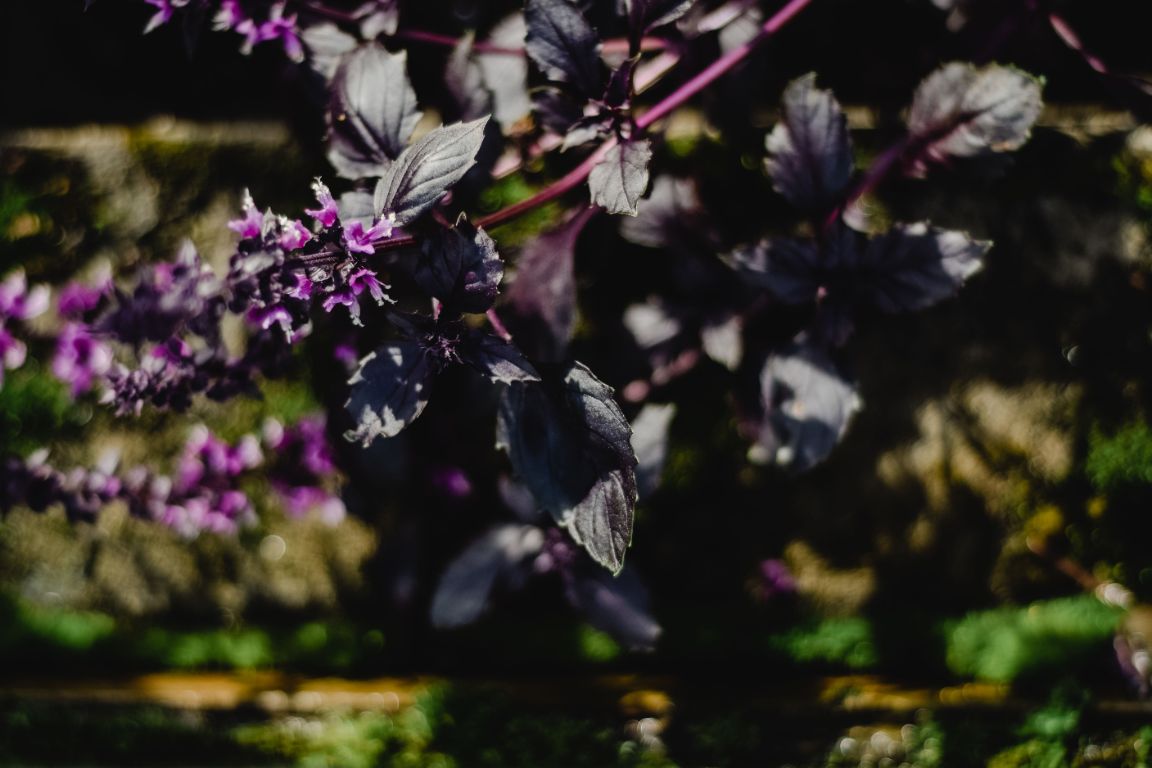
Purple basil gives you dark foliage and an edible crop in the same plant. Its rich purple leaves work especially well in small-space Halloween gardens, kitchen gardens, window boxes, and mixed containers.
Because basil is tender, it is best used where autumn remains warm or as a seasonal container plant that can be brought indoors before frost. The contrast between purple basil and orange peppers or pumpkins is simple but effective.
4. Dark Dahlias
Dark red and near-black dahlias can become the dramatic flowers in a Halloween planting. Cultivars such as ‘Black Jack’ produce very dark red blooms that can appear almost black, especially in lower autumn light.
They are useful because they often keep flowering into autumn until frost ends the display. Plant them where they can act as vertical focal points behind lower foliage plants.
5. Ornamental Peppers
Ornamental peppers are almost made for Halloween containers. Depending on the cultivar, the fruits can be orange, red, purple, cream, or very dark, and several colors may appear on the same plant as the fruit matures.
Use them in pots beside a doorway, mixed with purple foliage, or tucked among fall flowers. They give the visual effect of miniature glowing lanterns without needing any artificial decoration.
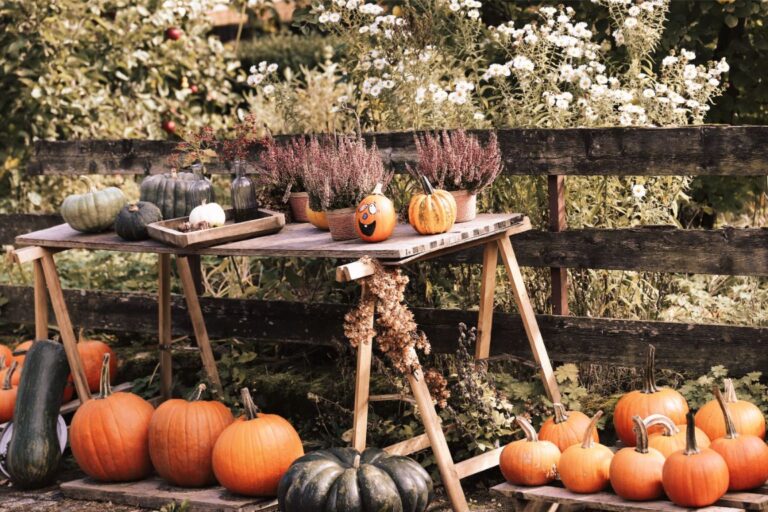
6. Pumpkins and Small Decorative Squash
Pumpkins are still the most recognizable Halloween garden plant, but they are more useful when grown as part of the garden rather than added only as decorations.
If you have space, grow compact pumpkin or ornamental squash varieties along the edge of a vegetable bed, around an arch, or over a sturdy support. By autumn, the vines and fruit naturally connect your edible garden to the Halloween theme.
7. Ornamental Kale and Cabbage
Ornamental kale and cabbage are especially useful because their best color arrives as temperatures cool. Purple, pink, white, and green rosettes fit naturally into late-season containers when many warm-weather plants are declining.
They are not “spooky” by themselves, but their strange layered shapes and purple tones make them excellent filler around dark foliage, pumpkins, and black containers. They also extend the display beyond Halloween into Thanksgiving and early winter.
8. Black Elder
If you want a permanent dark backdrop rather than a one-season display, a dark-leaved elder such as Sambucus nigra with purple-black foliage can provide a dramatic shrub layer.
Its finely divided leaves create a gothic look through much of the growing season, making it a natural background for orange fall plants and pale decorative pumpkins.
9. Bat Flower
For sheer weirdness, bat flower (Tacca chantrieri) is difficult to beat. Its dark flowers have broad “wings” and long whisker-like structures that make the plant look almost designed for Halloween.
The catch is that it is a tropical plant and much more demanding than common garden annuals. In cooler climates, treat it as a warm indoor or greenhouse specimen rather than a permanent outdoor Halloween plant.
10. White Baneberry or “Doll’s Eyes”
White baneberry (Actaea pachypoda) produces one of the strangest fruit displays in the garden: white berries with dark centers held on red stems, giving them the appearance of tiny eyes.
It suits woodland-style gardens and shaded areas where you want something naturally eerie rather than decorative. Important: the plant is toxic if eaten, so it is not a good choice for areas where young children or pets may handle or consume the berries.
How to Build a Halloween Garden Without Making It Look Temporary
The most effective Halloween gardens use plants as the base and decorations as the finishing layer.
Start with dark foliage
Use black mondo grass, dark heuchera, purple basil, or another deep-purple foliage plant to establish the mood. Dark leaves make brighter seasonal colors feel stronger.
Add orange in smaller amounts
Orange peppers, pumpkins, marigolds, or late-season flowers work better as highlights than as the entire planting. Too much orange can quickly turn a garden from dramatic to visually noisy.
Use pale plants for contrast
White pumpkins, silver foliage, white flowers, or pale ornamental grasses create a ghostly contrast against black-purple foliage.
Let seed heads and dried stems stay
You do not need to clean every bed perfectly before Halloween. Dried seed heads, ornamental grass plumes, twisted stems, and faded flower structures can add texture that feels much more natural than plastic props.
A Simple Halloween Container Recipe
- Back or center: dark dahlia, ornamental grass, or another upright plant
- Middle: ornamental pepper or purple basil
- Front: black mondo grass or dark heuchera
- Seasonal accent: one small pumpkin beside or inside the container
Use a black, charcoal, terracotta, or weathered metal container rather than adding too many Halloween-specific accessories. The plants should do most of the work.
Best Halloween Plants for Small Spaces
- Purple basil
- Ornamental peppers
- Dark heuchera
- Black mondo grass
- Miniature pumpkins
- Ornamental kale
For patios, balconies, and small front entrances, these can be combined into two or three pots rather than spreading small decorations across the whole space.
What to Plant in Spring or Summer for Halloween Color
| Plant type | When to plan for it | Halloween role |
|---|---|---|
| Dark perennials and shrubs | Plant well before fall so they establish | Permanent dark structure |
| Dahlias | Grow through warm season | Late dark flowers |
| Pumpkins | Plant according to days to maturity | Classic autumn fruit |
| Purple basil and peppers | Warm-season planting | Container color |
| Ornamental kale | Late summer into fall | Cool-season foliage |
Plants to Use Carefully Around Children and Pets
Some plants that look perfect for a spooky garden are genuinely toxic. White baneberry is one example. Castor bean is another dramatic dark-foliage plant often suggested for gothic gardens, but its seeds are highly poisonous.
If children or pets use the garden, choose visual drama from foliage colors, pumpkins, peppers, grasses, and containers rather than adding a toxic plant simply because it looks unusual.
Add Decorations After the Plants Are in Place
Once the planting has structure, decorations become much easier. A few pumpkins, low pathway lights, a lantern, or a single focal prop can be enough.
For the decoration layer, see our Halloween Garden Decorations guide. If you are using the garden for entertaining, our Halloween Garden Party Ideas guide covers layout, lighting, food stations, and guest planning.
Frequently Asked Questions
What flowers are best for a Halloween garden?
Dark red or near-black dahlias are excellent for drama, while orange marigolds, chrysanthemums, and other fall flowers can provide brighter seasonal color. Choose varieties that are still blooming in your local climate in October.
Are there truly black garden plants?
Very few plants are literally black, but black mondo grass comes close. Many other “black” plants are actually extremely dark purple, burgundy, or red.
What can I plant in pots for Halloween?
Try ornamental peppers, purple basil, dark heuchera, black mondo grass, ornamental kale, and miniature pumpkins. These give you strong color without requiring a permanent garden redesign.
Can a Halloween garden still look good after October?
Yes. If the design is based on foliage and fall plants rather than novelty props, you can remove the Halloween decorations in November and keep much of the same planting for Thanksgiving and early winter.
The Practical Bottom Line
The best Halloween garden is not a normal garden buried under decorations. Start with plants that already provide dark foliage, orange fruit, purple leaves, unusual flowers, and autumn texture. Then add only enough seasonal decoration to make the theme obvious.
For an easy starting combination, use black mondo grass or dark heuchera for the base, ornamental peppers or pumpkins for orange color, and one dramatic plant such as a dark dahlia as the focal point. That gives you a Halloween look that still feels like a real garden.