
Halloween Garden Decorations: 25 Outdoor Ideas That Work
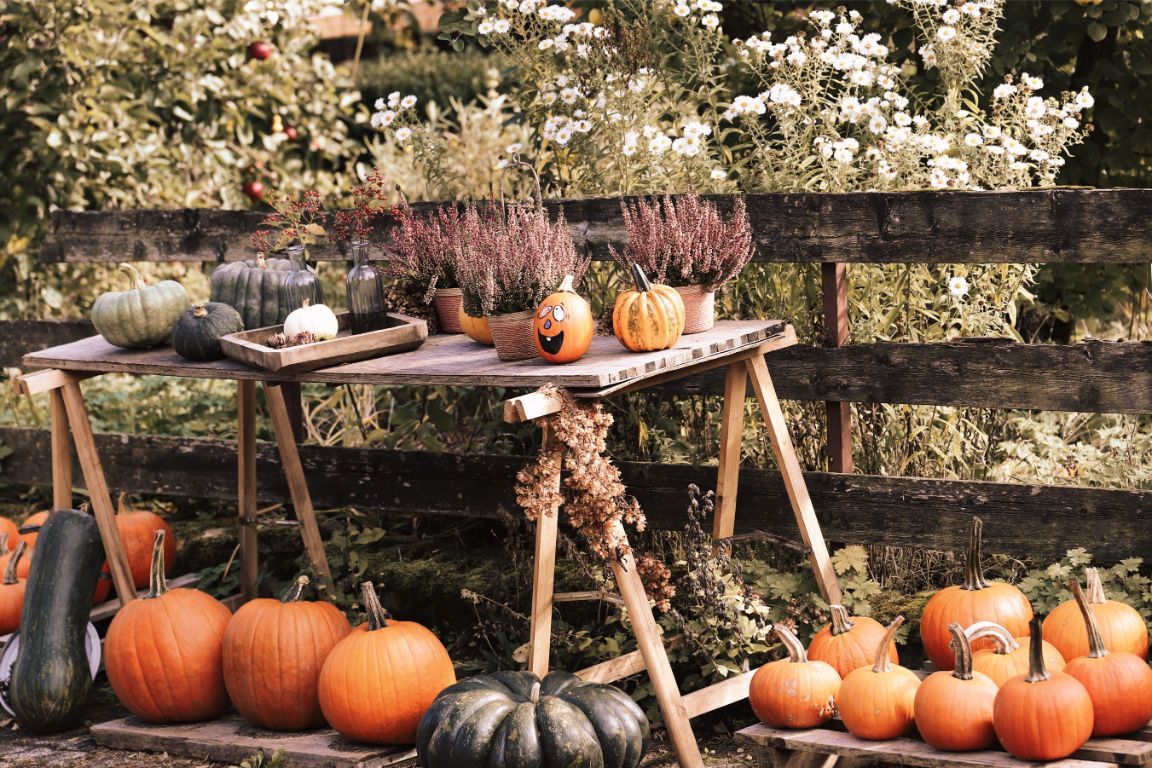
Quick answer: The easiest way to decorate a garden for Halloween is to build around what is already there: pathways, planters, trees, garden beds, fences, and the front entrance. Use pumpkins and natural fall materials for the daytime look, then add low-level lighting, lanterns, silhouettes, and one or two focal props for nighttime. A few strong areas usually look better than scattering decorations across the whole yard.
Halloween garden decorations work best when the garden still feels like a garden. You do not need to cover every plant with fake cobwebs or fill the lawn with inflatables. Instead, use your existing landscape as the structure and add seasonal layers that are easy to install, weatherproof, and remove once October is over.
Below are practical ideas for entrances, beds, pathways, trees, containers, small gardens, and nighttime displays—plus a few ways to make the setup last into November.
25 Halloween Garden Decoration Ideas
1. Build a Pumpkin Cluster at the Entrance
Instead of placing one pumpkin on each step, group several sizes together near the entrance. Mix orange, white, green, and deeply ribbed varieties for a more natural harvest look.
Keep the largest pumpkins at the back and smaller ones toward the front. Add one potted mum, ornamental kale, or dark foliage plant so the arrangement feels connected to the garden rather than dropped onto the porch.
2. Line a Path With Pumpkins
A short run of pumpkins along a garden path immediately creates a Halloween route. You do not need one every foot; wider spacing looks cleaner and makes the path safer.
For nighttime use, place battery lanterns or outdoor-rated pathway lights between some of the pumpkins rather than using open flames.
3. Use Dark Plants as Part of the Display
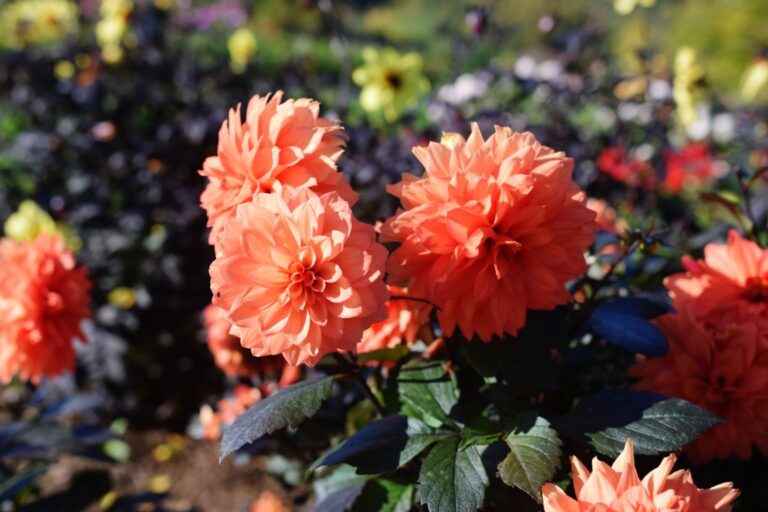
Near-black foliage and deep burgundy flowers can make Halloween decorations look much more integrated. Black mondo grass, dark heuchera, purple basil, ornamental peppers, and deep-colored chrysanthemums all work well in seasonal containers.
For more plant choices, see our Best Plants for a Halloween Garden guide.
4. Create a Black-and-Orange Flower Pot
A large container can carry the entire Halloween color scheme without any plastic décor. Combine a dark foliage plant with orange mums, calendula, pansies, ornamental peppers, or another fall-blooming plant suited to your climate.
Our Black and Orange Flowers for a Halloween Garden guide has more combinations.
5. Turn an Empty Planter Into a Pumpkin Display
If a summer container is finished, do not leave it empty. Remove dead annuals, leave any sturdy foliage, and nestle a small pumpkin or gourd into the center. Add dried stems, ornamental grass, or branches for height.
6. Add Lanterns Between Plants
Lanterns work especially well at the front of borders and around seating areas. Use battery-operated candles or outdoor-rated LED lights so there is no open flame near dry leaves, mulch, or seasonal materials.
7. Light a Tree From Below
A mature tree can become the strongest Halloween feature in the garden with very little decoration. Aim an outdoor-rated uplight at the trunk and lower branches to emphasize bark, branch structure, and shadows.
This usually looks more dramatic than wrapping every branch in colored lights.
8. Hang Simple Silhouettes From Branches
Flat bats, ravens, moons, or lightweight ghost shapes can be suspended from sturdy branches. Keep them sparse so each shape reads clearly after dark.
Make sure anything hanging outdoors is secured against wind and positioned high enough that guests cannot walk into it.
9. Use Bare Branches in Containers
Pruned branches placed upright in a heavy planter create an inexpensive gothic structure. Leave them natural, or add a few lightweight bats, tiny lights, or ribbon.
Weighted containers are important if the arrangement is exposed to wind.
10. Make a Small Graveyard in One Bed
Instead of spreading tombstones across the entire lawn, group three to five in one garden bed. Tuck them behind existing plants and use low lighting to create depth.
One concentrated scene usually looks more intentional than a large number of props placed randomly.
11. Use Ornamental Grasses for Movement
Leave mature ornamental grasses standing through October. Their dry seed heads catch light, move in the wind, and create texture around pumpkins and lanterns.
You may already have the perfect Halloween backdrop without adding anything new.
12. Keep Selected Seed Heads and Dried Stems
Not every perennial needs to be cut back immediately. Coneflower heads, sedum, alliums, grasses, and branching stems can give a late-season border a naturally eerie silhouette.
Remove anything diseased, collapsing onto a walkway, or likely to become a safety problem, but let attractive structure remain.
13. Add a Wreath With Natural Garden Materials
A Halloween wreath does not have to use plastic spiders. Start with grapevine, dried seed heads, dark foliage, small gourds, dried grasses, or pruned twigs.
Black ribbon or a small dark accent is enough to shift it from general fall décor toward Halloween.
14. Decorate a Fence With Repeating Elements
Fences give you a strong horizontal line, so repetition works well. Try evenly spaced black lanterns, small wreaths, simple bat silhouettes, or a restrained garland rather than mixing unrelated decorations.
15. Create a Witch’s Herb Corner
If you already grow herbs, temporarily style one section as a “witch’s garden.” Add simple plant labels, a dark pot, and a few props around real herbs such as sage, rosemary, thyme, or mint.
Avoid implying that unfamiliar or toxic plants are safe to handle or consume just because they fit the theme.
16. Use White Pumpkins for a Ghostly Look
White pumpkins show up especially well against dark foliage, black containers, evergreen shrubs, or shadowed garden beds. A few white pumpkins can create a stronger effect than adding more props.
17. Put One Skeleton Where It Makes Sense
One well-placed skeleton can be funnier and more effective than several. Seat it on a garden bench, place it beside a wheelbarrow, or position it as if it is tending a planter.
The garden context makes the decoration feel intentional.
18. Turn a Wheelbarrow Into a Seasonal Display
An old wheelbarrow can hold pumpkins, gourds, potted plants, straw, or dried stems. It works particularly well near a vegetable garden, shed, or side entrance where the object already feels natural.
19. Add Low Pathway Lighting
Keep most Halloween lighting low to the ground. Small pathway lights, lanterns, and uplights create shadows without flooding the entire garden with bright light.
Low lighting also helps guests see steps, edging, and changes in level.
20. Use Colored Light Sparingly
Orange, purple, or green lighting can work, but one color in one zone usually looks better than several colors everywhere. For example, use a purple wash on a tree and warm lantern light along the path.
21. Create a Small-Space Halloween Corner
For a balcony, townhouse entrance, or tiny front garden, concentrate everything into one composition: one large pot, one pumpkin cluster, one lantern, and one hanging element.
Do not shrink a large-yard design by simply adding many tiny decorations. Fewer, larger elements usually work better in a small space.
22. Decorate Garden Steps Without Blocking Them
Keep the center of steps completely clear. Place pumpkins, lanterns, or planters on wide outer edges only where there is enough room to walk safely.
Decorations should never narrow the path guests need to use after dark.
23. Use a Firepit Area as the Party Focal Point
If you already have a safe, permanent firepit area, it can become the visual center of an outdoor Halloween gathering. Keep seasonal décor well away from the flame and use seating, blankets, and low lighting around the perimeter.
For a full event setup, see our Halloween Garden Party Ideas guide.
24. Build a Display That Can Stay Through Thanksgiving
If you do not want to redecorate in November, base the display on pumpkins, gourds, mums, ornamental kale, grasses, branches, and warm-white lighting.
After Halloween, remove the skeletons, bats, tombstones, and black accents. The remaining setup immediately becomes a fall or Thanksgiving display.
25. Create One Strong Nighttime Focal Point
Before adding more decorations, step outside after dark and look at the garden from the street or main approach. Choose one feature—a tree, entrance, bench, arch, or planter group—and make that the brightest or most dramatic area.
A clear focal point makes the entire garden feel more designed.
Best Plants for a Halloween Garden Display
Plants help the display look good during the day, when lighting and shadows are less effective. Good seasonal choices include:
- dark heuchera
- black mondo grass
- ornamental kale and cabbage
- chrysanthemums
- pansies and violas
- ornamental peppers
- purple basil in mild climates
- ornamental grasses
- pumpkins and gourds
Ornamental kale is particularly useful in cool climates because its color becomes stronger as temperatures fall. University Extension guidance also commonly recommends mums, pansies, ornamental kale, and pumpkins for fall displays.
How to Make Halloween Decorations Look Good in Daylight
Many Halloween displays only work after dark. To make the garden attractive during the day too, use real texture and color rather than relying entirely on lighting.
- Mix pumpkin colors and shapes
- Use real fall plants in containers
- Leave ornamental grasses and attractive seed heads standing
- Use natural branches, grapevine, cornstalks, or dried materials selectively
- Limit cheap lightweight props that look unfinished in daylight
Halloween Garden Lighting: Keep It Simple
Lighting should do two jobs: create atmosphere and help people move safely through the garden.
Use products marked for outdoor use, inspect older cords and light sets before installation, and keep electrical connections away from standing water. Outdoor circuits should have appropriate ground-fault protection, and cords should be routed away from paths where guests can trip over them.
For pumpkins and lanterns near walkways, battery-operated lights are usually easier to manage than open candles.
Weatherproofing Your Halloween Display
October weather can be windy, wet, or unexpectedly cold. Before you finish the display, check every item as if a storm were arriving that night.
- Weight lightweight containers and props
- Anchor tall decorations securely
- Keep paper and cardboard items under cover
- Use outdoor-rated lights and extension cords outdoors
- Do not place electrical connections where water collects
- Move fragile or fabric decorations indoors during severe weather
Halloween Garden Safety
A good display should still be easy to walk through after dark. Keep steps, narrow paths, handrails, gates, and entrances clear. Avoid stretching cords across walking routes, and do not hide uneven paving with leaves or fabric.
Dry cornstalks, grasses, paper decorations, and similar materials can ignite easily, so keep them away from firepits, candles, heaters, and other heat sources.
If children or pets use the garden, also think about sharp stakes, breakable props, small pieces, toxic plants, and decorations that could be mistaken for food.
A Simple Halloween Garden Setup You Can Copy
If you want a finished look without decorating the entire garden, build just three zones:
- Entrance: pumpkin cluster + fall planter + lantern.
- Path: low outdoor lighting + a few widely spaced pumpkins.
- Focal point: one lit tree, bench scene, or small graveyard bed.
That is enough to make the garden feel deliberately decorated without turning setup and cleanup into a major project.
Frequently Asked Questions
How can I decorate my garden for Halloween cheaply?
Use what the garden already provides: branches, seed heads, grasses, old containers, and a wheelbarrow. Add pumpkins and a few reusable lights rather than buying many small props.
How do I decorate a small garden for Halloween?
Concentrate the display near the entrance or one container grouping. One large planter, two or three pumpkins, a lantern, and one hanging feature can be enough.
What plants work well for Halloween?
Dark heuchera, black mondo grass, ornamental peppers, ornamental kale, pansies, mums, dark dahlias, purple basil, and pumpkins can all support a Halloween color palette.
How early should I decorate the garden for Halloween?
Durable fall plants, pumpkins, lighting, and weatherproof decorations can go out earlier in October. Save carved pumpkins and fragile materials until closer to Halloween because they deteriorate faster.
Can Halloween garden decorations stay up for Thanksgiving?
Yes, if the base is built from pumpkins, gourds, mums, kale, grasses, branches, and warm lighting. Remove overt Halloween props after October 31 and the rest can remain as a fall display.
The Practical Bottom Line
The strongest Halloween garden displays do not use the most decorations. They use the garden itself as the backdrop, create one or two focal points, and combine daytime texture with safe nighttime lighting.
Start with pumpkins and seasonal plants, light the main path, choose one dramatic feature, and stop before every empty space gets filled. The result is easier to install, safer to walk through, and much easier to transition into a November fall display.


3 Comments
Comments are closed.