
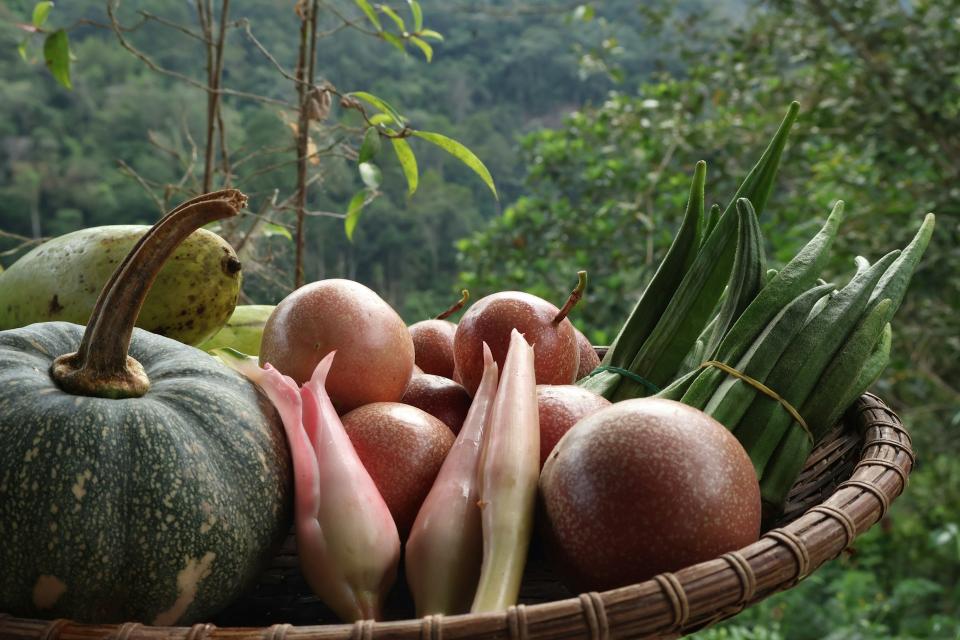
Best Companion Plants for Okra, and What to Avoid
Quick answer: Good companion plants for okra are those that enjoy warm weather, do not block its sun, and fit around its tall growth habit. Practical options include bush beans, peppers, eggplant, basil, sweet alyssum, zinnias, and fast early crops such as radishes or lettuce before the okra canopy fills out. Use companion planting mainly to improve space use and insect diversity—not as a substitute for correct spacing, crop rotation, watering, or pest control.
Okra is one of the easiest summer crops to design a mixed bed around because it grows upright and loves heat. But its height can also create problems. A poor companion may be shaded, tangled into the stems, or make harvesting uncomfortable.
The best combinations start with okra’s needs first: full sun, warm soil, good drainage, enough room to walk between plants, and regular harvesting. Add companions only where they improve the use of the bed without making those basics harder.
Best Okra Companion Plants at a Glance
| Companion | Why it fits | Best placement | Main caution |
|---|---|---|---|
| Bush beans | Warm-season crop with a lower growth habit | Separate row beside okra | Do not crowd harvest paths |
| Peppers | Similar sun and warm-weather requirements | On the sunny side of the bed | Leave enough room for both mature canopies |
| Eggplant | Shares heat, sun, and moisture preferences | Parallel row with generous spacing | Watch overall pest pressure in mixed vegetable beds |
| Basil | Compact, heat-loving, useful flowering herb | Bed edge or between widely spaced plants | Prevent dense growth around okra stems |
| Sweet alyssum | Low-growing flowers for beneficial insects | Bed border | Can reseed freely |
| Zinnias | Summer flowers that attract pollinators | Ends or outside edge of the bed | Place so they do not shade shorter crops |
| Radishes | Fast crop that finishes before okra gets large | Between future okra positions early | Better as succession planting than permanent interplanting |
| Lettuce | Uses open ground early in the season | Before okra fills the bed | Usually declines once summer heat arrives |
Start With Okra’s Growing Habit
Okra is a tall warm-season vegetable that performs best in full sun and fertile, well-drained soil. Standard varieties can become several feet tall, and the pods need to be picked frequently once production begins.
That makes access unusually important. Wider row spacing is useful not only for plant growth but also because closely planted okra becomes difficult to harvest. Dwarf varieties can be spaced more tightly, while standard and large types need substantially more room.
For home gardens, a useful starting point is roughly 12–24 inches between okra plants depending on the variety, with wider paths or row spacing where needed for picking. Always follow the mature size on the seed packet rather than forcing every variety into one universal spacing.
Bush Beans
Bush beans are one of the more practical vegetables to grow near okra. They like warm soil, stay much lower than standard okra, and can occupy a separate row without climbing through the stems.
Plant them far enough away that bean foliage does not block the base of the okra plants or make harvesting difficult. Avoid the common claim that beans will automatically “feed” growing okra with nitrogen. Legumes use most of the nitrogen they fix themselves during the season; any benefit to later crops is more relevant after roots and plant residues break down.
Peppers
Peppers and okra are easy to manage in the same summer garden because both need warmth and full sun. Put peppers where tall okra will not shade them heavily—usually toward the sun-facing side of the bed.
The real benefit is compatibility, not a magical pest-repelling relationship. Similar irrigation schedules and warm-season timing make the combination easier to manage than pairing okra with a crop that prefers cool weather.
Eggplant
Eggplant also fits well from a cultural standpoint. It wants heat, sun, rich soil, and consistent moisture, so the two crops can share a summer irrigation schedule.
Do not alternate large okra and eggplant plants too tightly. Both can develop broad canopies, and a dense bed is harder to inspect for insects and harder to harvest. A parallel row arrangement usually works better.
If you are already growing eggplant nearby, see Best Companion Plants for Eggplant and Eggplant Growth Stages for spacing and seasonal care.
Basil
Basil is compact enough to fit around okra without becoming a serious competitor, and it thrives during the same hot part of the season. Harvesting keeps it low, while allowing a few stems to flower provides nectar for bees and other beneficial insects.
Use basil for bed diversity and harvest value rather than assuming its scent will completely repel aphids, mites, or other pests. Keep it several inches away from the okra stem so watering, airflow, and inspection remain easy.
Sweet Alyssum, Zinnias, and Other Flowers
Flowers are often more useful around the border than directly beneath okra. Sweet alyssum stays low and produces many small blooms that can support beneficial insects. Zinnias tolerate summer heat and draw a broad range of pollinators.
Place taller flowers at the ends of rows or outside the main vegetable bed. The goal is to add floral resources without creating another tall canopy that competes for light.
Radishes and Early Greens
Some of the best “companions” never need to grow beside mature okra at all. Because okra should not be planted into cold soil, the bed is often available for quick cool-season crops first.
- Sow radishes in the spaces where okra will eventually grow.
- Grow lettuce or other quick greens while spring temperatures are still mild.
- Harvest these crops before okra needs the full bed.
- Add compost and prepare the soil before the warm-season planting.
This is succession planting rather than simultaneous companion planting, but it often produces more food from the same space with fewer competition problems.
What About Cucumbers and Melons?
Cucumbers and melons are frequently recommended beside okra because their vines can cover open ground. The idea can work in a large bed, but it is not automatically space-efficient.
Long vines can cover paths, hide the base of okra plants, and make frequent pod harvesting awkward. Cucumbers also produce best with good light rather than being buried under a tall canopy.
If you want to try the combination, direct the vines away from the okra row or give them their own trellis. Treat any shade from the okra as incidental rather than designing the cucumber crop around deep shade.
Plants That Are Better Used Before or After Okra
Cool-season vegetables such as broccoli, cabbage, kale, spinach, and lettuce do not share okra’s preferred summer conditions. That does not make them “bad companions.” Their growing seasons simply fit better before or after the main okra crop in many climates.
This distinction is useful because traditional companion charts often turn a timing mismatch into a claim that two plants harm one another. In practice, succession planting usually solves the problem.
Do You Need to Keep Fennel Away From Okra?
Fennel appears on many “never plant near anything” lists because laboratory and greenhouse research has identified potentially allelopathic compounds. That does not establish a precise exclusion distance for an ordinary home garden or prove that fennel will suppress okra every time.
The simpler reason to give mature fennel its own space is practical: it becomes a large plant with a different structure and can occupy valuable vegetable-bed room. Grow it separately if space allows, but avoid presenting it as a guaranteed okra killer.
A Practical 4-by-8-Foot Okra Bed Layout
For a small mixed bed, use the taller okra as the structural crop rather than scattering it randomly among everything else.
- Plant a row of standard okra along the north side of the bed in the Northern Hemisphere so it casts less shade on shorter crops.
- Space plants according to the variety—often about 18 inches apart for standard types.
- Use the sunny front half for peppers, bush beans, or eggplant with their normal spacing.
- Plant basil between larger crops only where there is still open airflow.
- Put sweet alyssum or compact flowers along the perimeter.
- Keep one side or path fully accessible for frequent okra harvest.
Companion Planting Does Not Replace Pest Management
Okra can be affected by aphids, stink bugs, caterpillars, Japanese beetles, whiteflies, spider mites, and root-knot nematodes, depending on region. A diverse bed may support natural enemies, but it will not make the crop pest-proof.
- Inspect leaves, flower buds, and developing pods regularly.
- Remove badly infested or diseased material when appropriate.
- Control weeds that harbor pests around the bed.
- Rotate okra where soilborne nematodes or diseases are a concern.
- Use physical or targeted controls based on the pest actually present.
Common Okra Companion-Planting Mistakes
- Crowding the row: Okra needs room for picking as much as it needs room for growth.
- Putting sun-loving crops in heavy shade: Tall okra should not become a permanent roof over peppers, eggplant, or cucumbers.
- Letting vines take over paths: Melons and cucumbers can make daily harvesting difficult.
- Assuming companions prevent pests: Flowers and mixed crops support diversity but do not replace scouting.
- Ignoring crop timing: Cool-season vegetables often belong before or after okra, not under it all summer.
- Forgetting mature size: A small seedling arrangement can become an impenetrable bed by midsummer.
Frequently Asked Questions
What is the best companion plant for okra?
There is no single best plant. Bush beans, basil, peppers, eggplant, and flowering borders are all practical choices because they can fit into the same warm-season garden without requiring unusual care.
Can I plant tomatoes near okra?
Yes, if the bed is large enough for both mature plants. They share warm-weather requirements, but both can become large and difficult to harvest when crowded. Give each crop its normal spacing rather than alternating them tightly.
Can okra and peppers be planted together?
Yes. They are compatible from a climate and irrigation standpoint. Keep shorter peppers on the sunnier side so tall okra does not shade them excessively.
Can beans climb okra plants?
It is better not to use okra as a living trellis. Twining beans can wrap around stems, leaves, flowers, and harvestable pods, making picking harder. Give pole beans a separate trellis or use bush beans nearby instead.
Can lettuce grow under okra?
It can use some partial shade, but true lettuce is generally a cool-season crop. In hot climates, summer heat often becomes the limiting factor even if okra provides afternoon shade. It is usually more dependable as an early-season crop before the okra canopy develops.
The Best Approach
Design the bed for okra first, then add companions where they make sense. Preserve full sun, airflow, irrigation access, and a clear path for frequent pod picking. Use lower vegetables and herbs in adjacent spaces, add flowers around the perimeter, and use cool-season crops before the okra planting rather than forcing everything to grow together at once.
A simple okra bed with bush beans or peppers, a few basil plants, and a flowering border is usually more useful than a complicated “companion ecosystem” that becomes difficult to water and harvest.
Continue with the Vegetables, Herbs & Edible Gardening hub, or review Watering 101 and What You Need to Know About Soil before planning a dense mixed bed.
One Comment