
How Long Can Potatoes Stay in the Ground After Vines Die?
Quick answer: Mature potatoes can stay in the ground for a short period after the vines die, especially if the soil is dry and temperatures are mild. But the soil is not a safe long-term storage place. Once the crop is mature, prolonged wet soil, hard frost, pests, disease, or warm conditions can increase the risk of rot, greening, sprouting, and tuber damage. For a storage crop, harvest after the vines have died and the skins have set, ideally before a hard frost.
It is tempting to leave potatoes underground until you have time to dig them, especially when the vines have already turned yellow and collapsed. A few extra days is usually very different from leaving a mature crop buried for weeks in poor conditions.
The best decision depends on three things: whether the potatoes are actually mature, what the soil is doing, and what weather is coming next.
How Long Can Mature Potatoes Stay in the Ground?
There is no universal maximum number of days. University extension guidance generally recommends harvesting storage potatoes after the vines have died and the tubers have developed firm skins rather than using the soil as long-term storage.
In a home garden, mature potatoes can often remain underground for several days to a couple of weeks after vine death if conditions are dry, cool, and free of disease. That is a practical window rather than a guarantee. Wet soil, warm weather, or hard-frost risk can make earlier digging the safer choice.
If the Vines Are Still Green, the Potatoes May Still Be Growing
When potato foliage is healthy and green, the plant is still photosynthesizing and tubers may still be increasing in size. Digging the entire crop at this stage gives you an earlier harvest but stops further bulking.
If you only want a few small potatoes for dinner, you can carefully dig around the outside of a hill and remove a few new potatoes while leaving the plant in place.
If your goal is maximum yield and potatoes that store well, wait for stronger maturity signals. See How to Know When to Harvest Potatoes for the full checklist.
What Changes After the Vines Die?
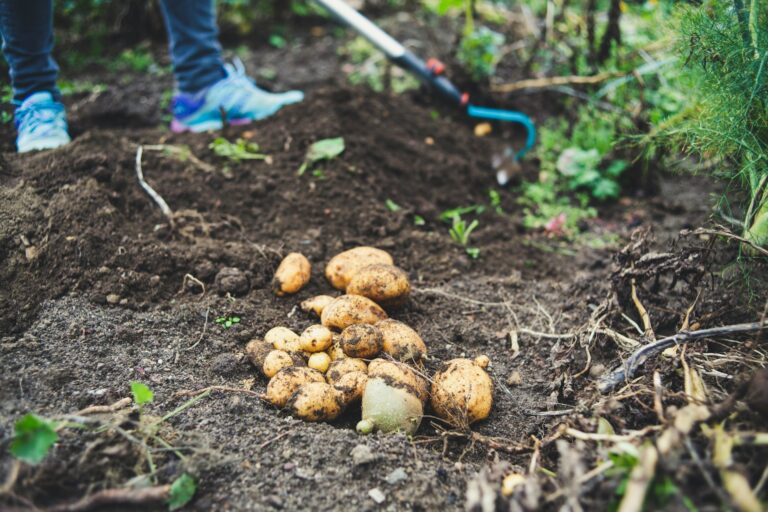
Once potato vines die naturally, the crop has reached the end of active growth. Leaving the tubers in the soil for a short period can allow the skins to finish setting, which makes them less likely to scrape during harvest.
Utah State University recommends digging storage potatoes after the vines have died, when the tubers are full sized and the skins are mature. A mature skin should be difficult to rub off with your thumb.
Penn State likewise recommends harvesting mature potatoes after the plants have died and before a hard frost.
The Soil Is Not a Refrigerator
Once potatoes are mature, leaving them underground does not automatically improve storage quality. The soil protects tubers from light, but it also exposes them to changing moisture, temperature, insects, rodents, and disease organisms.
That is why extension recommendations move mature potatoes from the ground into a controlled curing and storage environment rather than treating the garden bed as a storage cellar.
What Happens If Potatoes Stay in Wet Soil Too Long?
Wet soil is one of the strongest reasons not to delay harvest indefinitely. Saturated conditions reduce air around the tubers and can increase the risk of decay, especially when damaged or diseased potatoes are present.
If the forecast calls for prolonged heavy rain and your crop is already mature, it can be better to harvest during a dry window rather than wait for the bed to become waterlogged.
Can Potatoes Stay Underground Through Frost?
A light frost that kills remaining foliage does not necessarily destroy tubers protected by soil, but a hard freeze is a different matter. Once the soil freezes deeply enough to freeze the potatoes themselves, texture and storage quality can be badly damaged.
Penn State specifically advises harvesting mature potatoes before a hard frost. If freezing weather is approaching and the crop is mature, waiting longer offers little benefit.
What About Potatoes Left in the Ground All Winter?
Leaving potatoes in the garden all winter is not a reliable storage strategy. In climates with freezing soil, tubers can freeze. In milder climates, they may rot, sprout, be eaten by pests, or survive and emerge as volunteer potato plants the following season.
Volunteer potatoes can also complicate crop rotation because they keep the potato family present in a bed where you may be trying to reduce disease or pest pressure.
Can Mature Potatoes Keep Getting Bigger After Vine Death?
Not significantly. Most tuber bulking occurs while the plant still has functioning foliage. After the vines have completely died, the main benefit of a short waiting period is skin maturation—not continued enlargement.
How to Check Whether the Skins Are Set
- Carefully dig one representative potato.
- Brush away loose soil without washing it.
- Gently rub the skin with your thumb.
- If the skin slips or peels easily, it is still tender.
- If the skin stays firmly attached, the tuber is better prepared for harvest and storage.
When You Should Harvest Immediately
- a hard frost or soil freeze is approaching
- prolonged heavy rain or flooding is expected
- tubers are becoming exposed to sunlight
- rodents or other pests are damaging the crop
- serious disease is affecting the vines or tubers
- the skins are set and you already have suitable curing and storage conditions ready
What If You Harvest Too Soon Instead?
Harvesting early is usually less disastrous than gardeners fear. The potatoes are often simply smaller and more tender, with skins that do not store well.
We cover that situation separately in What Happens If You Harvest Potatoes Too Early?.
Frequently Asked Questions
How long can potatoes stay in the ground after the plant dies?
Usually long enough for the skins to set and for you to wait for a suitable dry harvest window, but not indefinitely. A few days to a couple of weeks can be reasonable in dry, mild conditions. Weather, disease, soil moisture, and frost risk matter more than a fixed number.
Can you leave potatoes in the ground for a month after the vines die?
You might get away with it in cool, dry soil, but there is usually little benefit. Once the skins are set, the crop is safer in controlled storage than exposed to changing garden conditions.
Will potatoes rot if left underground?
They can, especially in wet, poorly drained, warm, or disease-affected soil. Dry, cool soil lowers the risk but does not turn the ground into permanent storage.
Do potatoes keep growing after the tops die?
Not to any meaningful degree. Once the foliage has completely died, active tuber bulking has essentially ended. A short delay mainly allows skin set rather than substantial additional size.
The Practical Bottom Line
Potatoes do not have to be dug the exact day the vines die. A short period in dry, mild soil can help skins finish setting and gives you time to choose a good harvest day.
But once the skins are firm, there is little advantage to leaving a mature crop underground for weeks. Harvest before hard frost, prolonged wet weather, disease, or pests turn a good crop into a damaged one.
For the complete harvest-readiness guide, read How to Know When to Harvest Potatoes. If you are worried you already dug too soon, see What Happens If You Harvest Potatoes Too Early?.
One Comment