
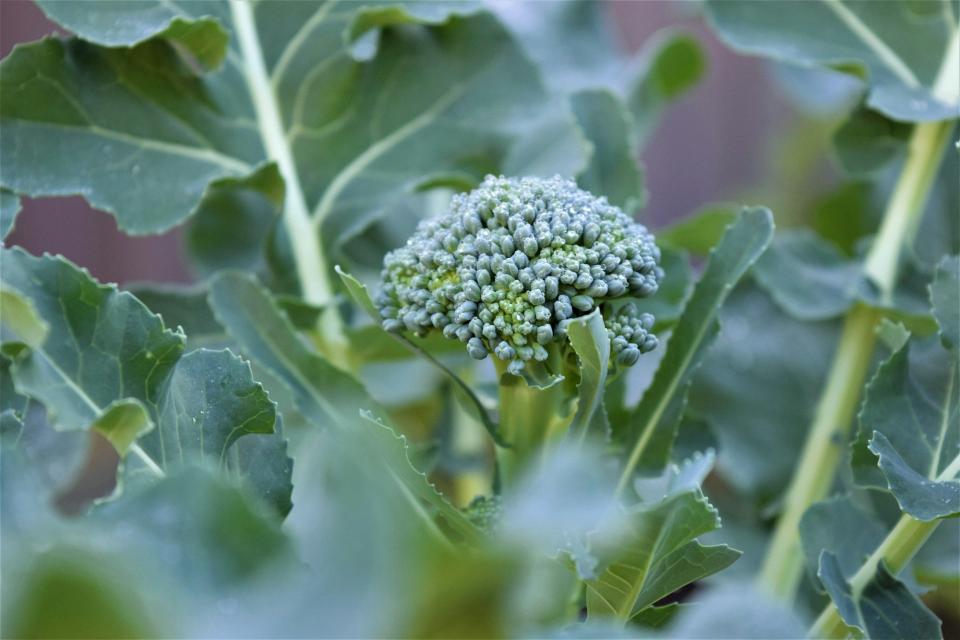
Best Companion Plants for Broccoli—and What to Avoid
Quick answer: Good companion plants for broccoli include onions, thyme, dill, cilantro, lettuce, radishes, beets, and flowering plants such as sweet alyssum. The most useful combinations either fit into open space around broccoli, attract beneficial insects, or help reduce caterpillar pressure. Avoid crowding broccoli with other large brassicas, and do not rely on companion planting alone for cabbage worms, flea beetles, aphids, or clubroot.
Broccoli is a cool-season crop with a broad canopy, shallow roots, and a strong appetite for moisture and fertility. That makes spacing more important than any companion-planting chart. The right neighbor can help use empty space or support beneficial insects; the wrong one simply adds competition.
Broccoli also attracts several pests that specialize on brassicas. Companion plants can play a supporting role, but physical barriers, crop rotation, scouting, and correct timing are still the foundation of reliable pest control.
Best Broccoli Companion Plants at a Glance
| Companion | Why it can work | Best placement | Main caution |
|---|---|---|---|
| Onions | Compact upright growth; research suggests alliums can affect pest host-finding | Between or beside broccoli with normal spacing | Do not crowd the broccoli root zone |
| Thyme | Research has found reduced caterpillar damage in broccoli systems | Sunny bed edge | Prefers drier soil than broccoli once established |
| Dill | Flowers attract beneficial insects | Edge or nearby insectary strip | Mature dill can become tall and shade broccoli |
| Cilantro | Small flowers support beneficial insects when allowed to bloom | Between rows or along edges | Bolts quickly in warm weather |
| Lettuce | Low-growing and fast enough to use open space | Between young broccoli plants | Harvest before broccoli canopy closes |
| Radishes | Fast crop; useful for succession and space efficiency | Near the base of broccoli early | Harvest promptly before crowding |
| Beets | Different growth form and root crop harvest | Separate row or between wide broccoli rows | Still compete for water if packed tightly |
| Sweet alyssum | Small flowers feed beneficial insects | Border of the bed | Can reseed freely |
Start With Broccoli’s Real Growing Needs
Broccoli performs best in cool weather, full sun, fertile soil, and steady moisture. Depending on the cultivar, mature plants can spread roughly 18–24 inches or more, so neighboring crops need to fit around that canopy rather than underneath it permanently.
University extension guidance consistently emphasizes that broccoli is sensitive to stress. Heat, drought, poor fertility, root disturbance, and pest injury can all reduce head size or prevent a good crown from forming.
For that reason, companion planting should never reduce the broccoli plant’s access to water, nutrients, sunlight, or airflow.
Onions and Other Alliums
Onions are one of the easier vegetables to fit near broccoli because they grow upright and occupy relatively little canopy space. They can be planted between broccoli plants in a wide row or in a parallel row nearby.
There is also some research support for using aromatic alliums in diversified plantings. University of Maryland Extension notes that volatile compounds from alliums can repel some insects or make host plants more difficult to locate.
That should not be interpreted as complete cabbage-worm control. Use onions because they fit the bed well and may contribute to pest disruption—not because one onion guarantees protection for one broccoli plant.
Thyme
Thyme is one of the more interesting research-backed companions for broccoli. University of Maryland Extension summarizes research showing thyme can help reduce caterpillar damage in broccoli.
Its main practical limitation is water. Mature thyme prefers drier conditions than broccoli. Rather than planting thyme directly beside the broccoli stem where irrigation is heaviest, place established plants along the outer edge of the bed or in a nearby herb border.
Dill and Cilantro
Dill and cilantro are useful because their small flowers are accessible to many beneficial insects, including parasitoid wasps and predatory flies. These insects can contribute to biological control around vegetable beds.
Allow selected plants to flower rather than harvesting every stem. Place tall dill toward the north side of the broccoli bed in the Northern Hemisphere so it does not shade the crop.
Cilantro works especially well in spring and fall because it prefers cooler weather. Once temperatures rise, it bolts quickly—which is not necessarily a problem if the goal is to produce flowers for insects.
Lettuce
Lettuce is one of the easiest ways to use the open ground around young broccoli. Both crops prefer cool conditions, and lettuce usually matures before the broccoli canopy reaches full size.
- Plant lettuce between widely spaced broccoli transplants.
- Harvest outer leaves or whole heads before broccoli begins crowding them.
- Do not allow a dense lettuce carpet to interfere with watering the broccoli.
This is a good example of companion planting based on timing and space use rather than pest-repellent folklore.
Radishes
Radishes mature quickly and can occupy gaps around broccoli early in the season. University of Maryland Extension specifically gives radishes at the base of broccoli as an example of combining small and large crops efficiently.
The key is harvesting them on time. If radishes remain in the bed after broccoli expands, they stop being efficient companions and become additional competition.
Beets
Beets fit into a broccoli bed because they have a different growth form and can be harvested before or around the main broccoli harvest. They are not a pest-control companion, but they can improve total bed productivity when spacing is generous.
Give both crops enough room. Broccoli and beets still share the same soil moisture and nutrient pool, so alternating them every few inches is not an improvement over proper spacing.
Sweet Alyssum and Flowering Borders
Small-flowered plants around the perimeter can provide nectar and pollen for beneficial insects without occupying the broccoli root zone. Sweet alyssum is especially useful because it stays low.
Other options include flowering cilantro, dill, basil, mountain mint, buckwheat, and anise hyssop. Put larger perennial or tall flowering plants outside the main vegetable bed rather than between broccoli plants.
What About Nasturtiums?
Nasturtiums are commonly recommended for brassicas, and University of Maryland Extension summarizes research showing nasturtium can help reduce caterpillar damage in broccoli.
Use them around the edge rather than letting trailing plants cover the broccoli base. They may also attract aphids, but calling them a guaranteed “trap crop” is too simplistic unless you are actively monitoring and managing the insects they attract.
Should Broccoli Be Planted With Other Brassicas?
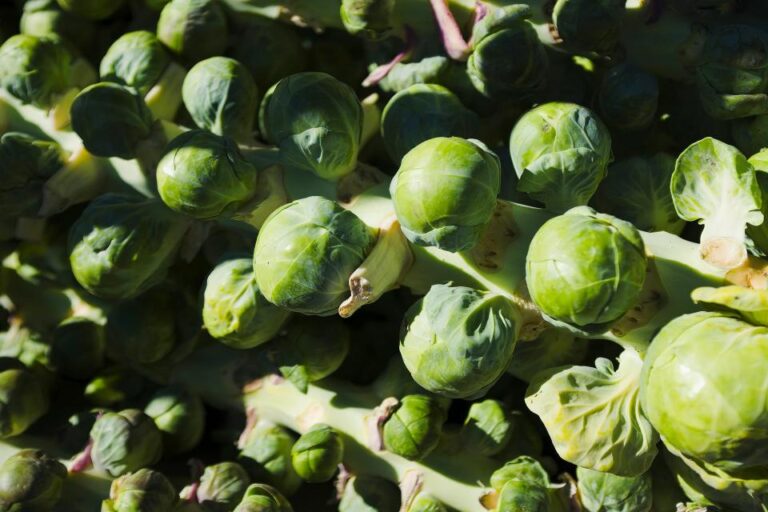
Broccoli can physically grow beside cabbage, cauliflower, kale, Brussels sprouts, collards, and kohlrabi. They are not chemically incompatible.
The problem is that these crops share many of the same pests and diseases. A dense block of brassicas gives cabbage worms, loopers, flea beetles, aphids, and disease organisms a large continuous group of suitable hosts.
You do not need an arbitrary four- or five-foot separation between every brassica. More important is rotating the entire brassica family away from previous brassica ground and avoiding an unnecessarily dense monoculture when pest pressure is high.
Plants That Usually Fit Poorly Beside Broccoli
| Plant or situation | Why it is usually a poor fit |
|---|---|
| Pumpkins and large squash | Vines can cover broccoli and make inspection difficult |
| Tall corn planted on the sunny side | Can shade a crop that needs strong light |
| Tomatoes packed into the same bed | Large warm-season plants compete heavily and prefer a different seasonal window |
| Peppers and eggplant during spring broccoli season | Require warmer soil and air temperatures |
| Dense plantings of cabbage, kale, and cauliflower | Concentrate brassica pests and diseases |
| Aggressive mint in the ground | Spreads into the root zone and is hard to remove |
A Practical 4-by-8-Foot Broccoli Bed
A simple mixed bed is usually easier to manage than a complicated companion scheme.
- Place broccoli in two staggered rows according to the variety’s mature spacing.
- Sow radishes in temporary gaps immediately after transplanting broccoli.
- Use lettuce along open edges or between plants where there is still room.
- Plant onions in a separate narrow row rather than directly against each broccoli stem.
- Place thyme, sweet alyssum, dill, or cilantro along the perimeter.
- Keep at least one side open enough for inspection, watering, and harvest.
Companion Planting Will Not Stop Cabbage Worms by Itself
Imported cabbageworm, cabbage looper, and diamondback moth larvae are major broccoli pests. Companion herbs and flowers may reduce damage or support natural enemies, but they do not make broccoli immune.
For small home plantings, row cover is often a more dependable first line of defense. University of Maryland Extension recommends covering broccoli as soon as it is planted or transplanted to protect against insects and frost, with adjustments as plants become tall or weather becomes hot.
- Inspect leaf undersides several times a week.
- Look for eggs, feeding holes, caterpillars, and frass.
- Use row cover early where practical.
- Hand-pick caterpillars in small gardens.
- Use Bacillus thuringiensis var. kurstaki or another appropriate control when needed and according to label directions.
Rotation Matters More Than Companion Lists
Broccoli shares important soilborne diseases and pests with cabbage, kale, cauliflower, Brussels sprouts, mustard, turnip, rutabaga, and related brassicas.
University of Minnesota Extension recommends growing broccoli where related crops have not been grown for the previous four years. That is much more meaningful for diseases such as clubroot than planting one “protective” herb next to the crop.
Rotate by plant family, not just by individual vegetable. Moving broccoli to the bed where cabbage grew last year is not a true rotation.
Common Broccoli Companion-Planting Mistakes
- Overcrowding: Broccoli needs a broad canopy and good access to moisture.
- Expecting herbs to replace pest control: Companion effects are usually partial, not complete.
- Grouping every brassica together: This concentrates shared pests and diseases.
- Ignoring seasonal compatibility: Broccoli and tomatoes may occupy the same garden, but they often prefer different planting windows.
- Using fixed exclusion distances: Plant size, airflow, and crop family matter more than arbitrary companion-chart numbers.
- Forgetting rotation: Soilborne problems cannot be solved by interplanting herbs.
Frequently Asked Questions
What is the best companion plant for broccoli?
There is no single best choice. Thyme and nasturtium have some research support for reducing caterpillar damage, while onions, lettuce, radishes, dill, cilantro, and flowering borders are practical for space use or beneficial insects.
Can broccoli and onions grow together?
Yes. Their different growth forms make them easy to combine when each crop receives enough spacing. Onions should be treated as a compatible intercrop, not a guaranteed pest shield.
Can broccoli and lettuce grow together?
Yes. Lettuce can use open soil around young broccoli and is often harvested before the broccoli canopy becomes large. Both also favor cool-season conditions.
Can broccoli be planted beside cabbage?
Yes, but they share the same major pest and disease problems. A large uninterrupted brassica block may make pest management harder, so diversity and proper rotation are useful.
Do marigolds protect broccoli?
Marigolds can add floral resources for beneficial insects, and some marigold species have documented effects on certain pests. They should not be presented as complete protection from broccoli caterpillars, aphids, or flea beetles.
The Best Approach
Build the bed around broccoli first: cool-season timing, full sun, generous spacing, fertile soil, steady moisture, and regular inspection. Then add companions that use temporary space, support beneficial insects, or have research-backed pest effects without compromising those basics.
A straightforward bed of broccoli with early radishes or lettuce, a row of onions, and flowering herbs or alyssum around the edge is more useful than a crowded mixture built from a long “good and bad companions” chart.
Continue with the Vegetables, Herbs & Edible Gardening hub, or compare another brassica guide in Companion Planting for Brussels Sprouts.
One Comment
Comments are closed.