What Happens If You Harvest Potatoes Too Early?
Quick answer: If you harvest potatoes too early, the tubers will usually be smaller, their skins will be thin and easy to rub off, and they will not store as well as fully mature potatoes. They are not automatically ruined—early potatoes are commonly eaten as “new potatoes.” The main trade-off is yield and storage life. If your goal is a full-size crop for winter storage, wait until the vines have naturally died back and the skins no longer rub off easily.
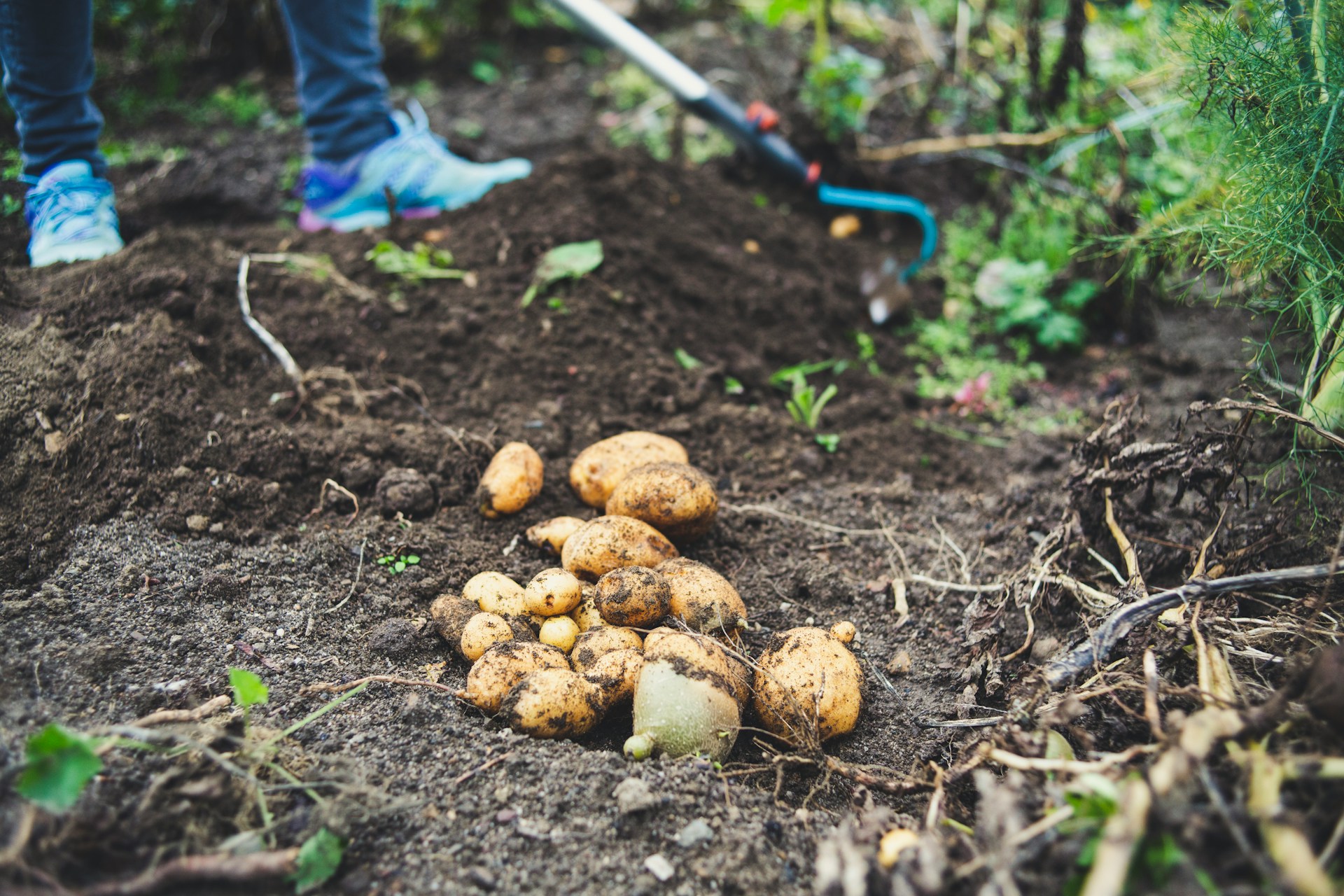
Digging into a potato hill and finding marble-size or golf-ball-size tubers can make it feel as though the crop has failed. Often, nothing is wrong. You may simply have checked while the plant was still bulking its tubers.
Potatoes can be harvested at more than one stage. Gardeners intentionally dig young tubers for fresh eating, while storage potatoes are left longer so they reach a larger size and develop tougher skins. Understanding which stage you have reached tells you whether to eat what you dug or leave the rest of the crop in the ground.
What Happens When Potatoes Are Dug Early?
| What you notice | What it usually means | What to do |
|---|---|---|
| Very small tubers | The plant was still in the tuber-bulking stage | Leave the remaining plants longer if you want larger potatoes |
| Skin rubs off with a thumb | The tuber is immature or a “new potato” | Handle gently and eat soon rather than storing long term |
| Plant is still green and vigorous | The crop is still actively growing | Usually wait for a storage harvest |
| Flowers have recently appeared | Tubers are forming or enlarging | Sample-dig only if you want new potatoes |
| No usable tubers yet | You may have dug extremely early or growing conditions delayed tuber formation | Cover the area and allow more growing time |
Early Potatoes Are Usually Edible—They’re Called New Potatoes
Harvesting before full maturity is not necessarily a mistake. “New potatoes” are simply potatoes dug before their skins have thickened and set.
Penn State Extension notes that gardeners can begin digging new potatoes at about eight weeks after planting. Utah State University likewise explains that potatoes may be harvested as soon as tubers begin forming.
New potatoes tend to have:
- smaller tubers
- very tender skins
- a fresh, moist texture
- shorter storage life than mature potatoes
They are best treated as a fresh vegetable. Handle them gently and plan to cook them relatively soon.
The Biggest Cost of Harvesting Too Early Is Lower Yield
Potato tubers do much of their size increase while the foliage is still healthy and photosynthesizing. If you dig the entire plant during this stage, that growth stops immediately.
The potatoes already attached to the plant will not continue enlarging after you remove them from the soil. A plant that might eventually have produced several full-size tubers may instead give you a larger number of small ones.
This is why calendar days alone are a poor reason to harvest the whole crop. Variety, weather, soil temperature, plant health, moisture, and planting date all affect how quickly tubers size up.
Early-Harvested Potatoes Do Not Store as Well
The second major difference is the skin. Mature storage potatoes develop a tougher skin that resists rubbing, moisture loss, and handling damage.
New potatoes have thin skins that scrape very easily. Penn State advises handling these tubers carefully and using them quickly. Utah State also notes that thin-skinned new potatoes dry out rapidly.
If you are planning to keep potatoes for months, wait for maturity rather than intentionally harvesting them as new potatoes.
How to Tell If a Potato Is Mature Enough for Storage
For a storage harvest, look at the plant and the tuber rather than relying only on a date.
- The vines have naturally yellowed and died back. Mature potatoes are generally harvested after the tops have senesced.
- The tubers have reached useful size. Carefully sample-dig beside one plant if you are uncertain.
- The skin does not rub off easily. Gently rub a thumb over a test potato. Storage-ready skin should remain attached.
- Conditions are reasonably dry. Digging in workable soil reduces mess and handling damage.
For a complete maturity checklist, see How to Know When to Harvest Potatoes.
Can You Dig a Few Potatoes and Leave the Plant Growing?
Yes. If you want a small meal of new potatoes without sacrificing the entire plant, carefully dig into the side of the hill and feel for a few tubers.
University of Minnesota Extension notes that some gardeners remove a few new potatoes while leaving the plant in place to produce more.
- Work from the outer side of the hill rather than directly beside the stem.
- Use your hands where possible once the soil is loosened.
- Take only a few tubers.
- Cover exposed roots and remaining tubers with soil again.
- Water normally afterward if the soil is dry.
There is still some risk of damaging stolons, roots, or developing potatoes, so avoid repeatedly disturbing every plant.
What If You Accidentally Dug Up the Whole Plant?
If you completely uprooted a plant and separated the potatoes, it is usually better to use those tubers rather than trying to replant the entire disturbed plant and expect normal production.
- Sound, undamaged small potatoes: clean gently and use as new potatoes.
- Cut or punctured potatoes: use promptly; damaged tubers are poor candidates for storage.
- Rotten, badly diseased, or heavily green tubers: do not put these into your storage crop.
If neighboring potato plants are still healthy and green, leave them growing rather than assuming the whole patch is ready.
How Early Is Too Early?
There is no universal day when potatoes suddenly become harvestable. Penn State suggests that new potatoes can often be dug around eight weeks after planting, while mature storage potatoes are harvested after the plants die back.
The variety matters. Early-season cultivars naturally mature sooner than midseason or late-season potatoes. Weather can also speed or slow development.
| Plant stage | Harvest recommendation |
|---|---|
| Recently emerged, little top growth | Too early for a useful harvest |
| Strong green growth, no signs of maturity | Wait unless deliberately checking tuber development |
| Flowering or recently flowered | Possible time for sample new potatoes, depending on variety |
| Green plant with usable small tubers | Harvest selectively for new potatoes or leave to bulk up |
| Vines yellowing and dying naturally | Approaching mature harvest |
| Vines dead and skins firm | Good stage for storage harvest |
Should You Wait After the Vines Die?
If the potatoes are intended for storage, allowing time for skin set can make them easier to handle without scraping or bruising. Commercial guidance commonly uses a period between vine death or vine removal and harvest to allow the skin to strengthen.
For a home garden, you do not need to follow a rigid number of days in every situation. Check the skin. If it still slips off with gentle thumb pressure, waiting a little longer in suitable soil conditions can improve storage quality.
If disease, flooding, hard frost risk, or another serious problem threatens the crop, leaving potatoes underground simply to reach a calendar target may not be worthwhile.
Can Early Potatoes Be Cured for Storage?
Curing helps wounds heal and skins toughen after harvest, but it does not turn truly immature new potatoes into the equivalent of fully mature storage potatoes.
Penn State recommends curing mature storage potatoes in a well-ventilated, humid environment before long-term storage. Utah State similarly advises curing storage potatoes after harvest.
If the skins are extremely thin and rub off easily, treat the potatoes as fresh new potatoes rather than counting on curing to give them a long storage life.
Do Small Potatoes Mean You Harvested Too Early?
Sometimes—but not always. Small tubers can also result from an early-maturing or naturally small variety, heat during tuber development, inconsistent watering, poor fertility, pest or disease damage, crowded plants, or inadequate sunlight.
If the plant has already died naturally and the potatoes are still small, simply waiting longer may not increase their size much. If the foliage is vigorous and green, however, the crop may still be bulking.
Early Harvest vs. Mature Harvest
| Feature | New / early potatoes | Mature potatoes |
|---|---|---|
| Plant at harvest | Often still green | Usually senesced or dead |
| Tuber size | Usually smaller | Closer to full variety size |
| Skin | Thin, easily rubbed | Set and tougher |
| Handling | Very gentle | More durable, though still bruiseable |
| Best use | Fresh eating | Fresh eating or storage |
| Storage potential | Short | Much better when properly cured and stored |
Frequently Asked Questions
Can you eat potatoes harvested too early?
Yes, sound early-harvested potatoes are commonly eaten as new potatoes. Their main differences are smaller size, tender skins, and shorter storage life.
Will potatoes get bigger if I leave them in the ground?
If the plant is still healthy and actively growing, the tubers may continue bulking. Once the plant has finished its growth cycle and the vines have died naturally, additional size increase is limited.
Can I put an accidentally dug potato back in the ground?
A detached harvested tuber will not resume enlarging like a potato still attached to the plant. If the entire plant was lifted but remains mostly intact, replanting may be possible, but root and stolon damage can reduce production.
Why does the skin rub off my potatoes?
Skin that rubs off easily usually indicates that the tuber has not fully matured or completed skin set. That is normal for new potatoes but undesirable for long-term storage.
Should I harvest potatoes as soon as they flower?
Not necessarily. Flowering can coincide with tuber development, but it is not a precise maturity signal. You can carefully sample-dig if you want new potatoes; for a mature storage crop, wait for stronger maturity indicators.
The Practical Bottom Line
Harvesting potatoes early does not automatically ruin them. It usually gives you smaller, thin-skinned new potatoes that are excellent for fresh eating but poor candidates for long storage.
If your plants are still green and you want maximum yield, leave most of the crop in place and let the tubers continue bulking. If you want a few early potatoes, carefully sample one side of a hill and cover the plant again.
For the full harvest-readiness checklist, continue with How to Know When to Harvest Potatoes, or browse more edible-gardening guides in the Vegetables, Herbs & Edible Gardening hub.