When to Harvest Eggplant: 5 Signs It’s Ready
Quick answer: Harvest eggplant when the fruit has reached the expected size for its variety, the skin is still glossy, and the flesh feels firm with a slight give when gently pressed. Do not wait for the fruit to become dull, soft, or heavily seeded—those are signs it has gone past peak eating quality.
Eggplant is one of those crops that is usually better picked a little early than a little late. Unlike tomatoes, eggplants are harvested before full botanical maturity. The goal is tender flesh, small soft seeds, and glossy skin—not maximum age on the plant.
That means the calendar can only get you close. The fruit itself gives you the final answer.
How to Tell When Eggplant Is Ready to Harvest
| What you see | What it means | What to do |
|---|---|---|
| Glossy, fully colored skin | Usually near peak eating quality | Check firmness and size |
| Firm fruit with slight give | Ready or nearly ready | Harvest if it matches the variety’s normal size |
| Fruit still very small | Still developing | Leave it longer unless you want baby eggplant |
| Dull or bronze-looking skin | Likely overmature | Harvest immediately |
| Soft fruit with hard brown seeds | Past peak quality | Use if acceptable, but do not delay further |
The Best Sign: Glossy Skin
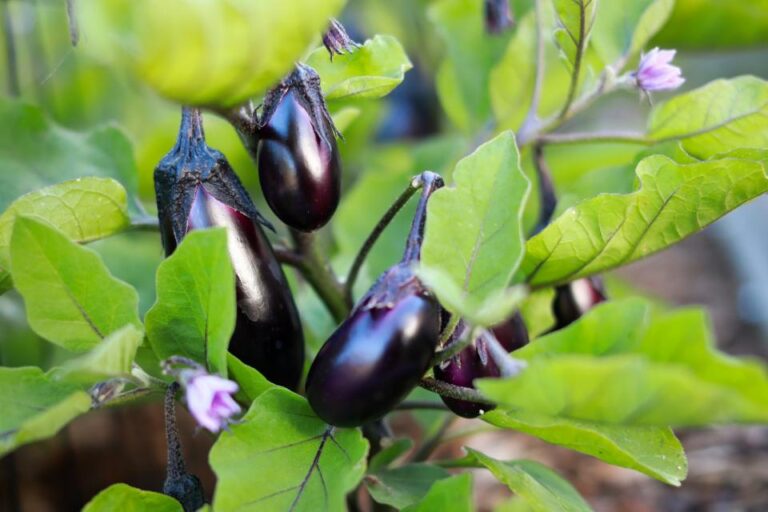
Healthy eggplant fruit typically has a smooth, shiny surface while it is still at good eating quality. Utah State University recommends harvesting when fruits are full sized, smooth skinned, glossy, firm, plump, and fully colored.
Penn State gives the same practical guidance: mature harvest-stage eggplants should have shiny skin and feel firm when gently squeezed. University of Minnesota likewise advises picking before the fruit’s color becomes dull.
This makes glossiness one of the easiest visual signals to use in the garden.
How Firm Should a Ripe Eggplant Feel?
A harvest-ready eggplant should feel firm, but not rock hard. When you gently press the skin with a fingertip, it should give slightly and then recover.
If the fruit feels extremely hard and is still undersized, it may need more time. If it feels soft, spongy, or stays indented after light pressure, it may already be overmature or damaged.
Use this firmness test together with color and gloss rather than relying on touch alone.
How Big Should Eggplant Be Before You Pick It?
There is no universal harvest size because eggplant varieties differ dramatically. A compact Asian or miniature variety may be ready while still narrow or only a few inches long, while a classic large purple cultivar can grow much bigger.
Utah State gives 6–8 inches as a general harvest range for common full-size eggplants, but the variety description is a better guide than forcing every cultivar into the same measurement.
The better rule is: expected mature size + glossy skin + firm texture.
How Long After Flowering Is Eggplant Ready?
Timing after flowering varies with variety and weather. Utah State notes that eggplant harvest can occur roughly 10–40 days after flowering depending on the cultivar.
That wide range is exactly why visual checks are more useful than counting days. Warm conditions can speed development, while cool weather can slow it considerably.
If you want to see where harvest fits into the full plant cycle, read our Eggplant Growth Stages guide.
What Happens If You Harvest Eggplant Too Early?
Harvesting a little early is usually not a serious problem. Young eggplants are often tender and have very small seeds. The main trade-off is simply less size and yield.
If a fruit is glossy, firm, fully colored for the variety, and large enough to use, there is no need to leave it on the plant just to make it bigger.
This is particularly useful for varieties that are intended to be harvested young and frequently.
What Happens If You Leave Eggplant Too Long?
Overmature eggplant loses quality fairly quickly. Penn State and Utah State both note that overmature fruits become duller, more heavily seeded, and can develop pithy or bitter flesh.
- Skin loses its shine
- Fruit may soften
- Seeds become larger, harder, and darker
- Flesh may become pithy
- Flavor can become more bitter
Leaving mature fruit hanging also does not help the plant. University of Minnesota recommends harvesting mature fruit promptly so the plant can continue flowering and setting more eggplants.
Can You Use an Overripe Eggplant?
Sometimes. If the fruit is simply a little dull and seedy but is not rotten, moldy, badly damaged, or bitter beyond use, you may still be able to cook it.
Cut it open first. Older fruit tends to have more developed seeds and a coarser texture. If the flesh is brown, water-soaked, rotten, or smells unpleasant, discard it.
How to Harvest Eggplant Properly
Do not twist or pull eggplant from the plant. The stems can be tough, and pulling can damage branches or tear the fruit.
- Choose a fruit that is glossy, firm, and the expected size.
- Use clean, sharp pruning shears or a knife.
- Support the fruit with one hand.
- Cut the stem rather than pulling it.
- Leave roughly an inch of stem attached to the fruit.
- Handle gently because eggplants bruise easily.
Penn State specifically recommends cutting rather than twisting and warns that stems can be bristly. Gloves are helpful, especially with spiny varieties.
How Often Should You Pick Eggplant?
Check productive plants every few days during warm weather. Eggplant can move from glossy and tender to dull and seedy faster than expected, especially during hot periods.
Frequent picking also encourages the plant to keep producing flowers and setting fruit rather than carrying old fruit past peak quality.
Does Eggplant Keep Ripening After You Pick It?
Eggplant does not improve after harvest in the way a tomato or peach can. Once picked, it will not become sweeter or develop better eating quality by sitting on the counter.
That is another reason to harvest based on quality while the fruit is still on the plant.
What About White, Green, Striped, or Asian Eggplants?
The same harvest principles apply even when the fruit is not dark purple. Do not use purple color as the maturity test for varieties that naturally ripen white, green, lavender, striped, or another color.
Instead, check the variety’s expected color and size, then look for smooth glossy skin and firm flesh.
This is especially important with white varieties, where a color change can be much subtler than with classic purple types.
When to Harvest Eggplant Before Frost
Eggplant is very sensitive to cold. University of Minnesota notes that cold nights can injure fruit left on the plant, and frost or chilling injury can cause bronzing, soft water-soaked tissue, internal browning, and rot.
If frost or an unusually cold night is approaching late in the season, harvest usable fruit rather than trying to squeeze out a few more days of growth.
Should You Harvest Eggplant in the Morning?
Time of day is less important than harvesting fruit at the correct maturity and handling it gently. In hot weather, picking during the cooler part of the day can make harvesting more comfortable and reduce the time freshly picked fruit spends heating in the sun.
If the fruit is ready, do not leave it for several extra days just to wait for an ideal harvest time.
How to Store Freshly Harvested Eggplant
Eggplant is more sensitive to cold than many gardeners expect. University of Minnesota warns that extended storage below about 50°F can cause chilling injury, including pitting, bronzing, and browning of the flesh.
Penn State recommends using eggplant relatively quickly because it is highly perishable. If possible, keep it cool rather than icy cold and avoid leaving it in a refrigerator for long periods.
- Do not wash until you are ready to use it
- Keep fruit out of direct sun after harvest
- Avoid bruising or stacking heavy produce on top
- Use within several days for best quality
- If refrigerated, use promptly and watch for chilling damage
Why Is My Eggplant Full Size but Still Not Ready?
Size alone can be misleading. A fruit may reach near-full size while its texture and skin are still changing.
Look for the combination of full color, smooth glossy skin, and firm flesh. If those signs are present, the eggplant is usually ready even if it does not match a supermarket size.
Common Harvest Mistakes
- Waiting for maximum size: bigger is not always better with eggplant.
- Waiting for the skin to dull: dullness usually indicates declining quality.
- Twisting fruit off the plant: this can break branches and damage fruit.
- Judging every variety by purple color: many cultivars mature in other colors.
- Ignoring cold weather: chilling injury can damage fruit before a hard frost arrives.
- Leaving mature fruit on the plant: frequent harvest supports continued production.
Frequently Asked Questions
How do you know when purple eggplant is ready?
Look for deep, even color, glossy skin, and firm flesh with a slight give. Harvest before the surface becomes dull.
Can you pick eggplant when it is small?
Yes. Small glossy eggplants are edible and often very tender. The trade-off is lower yield per fruit.
How can you tell if eggplant is overripe?
Overripe eggplant commonly has dull skin, softer flesh, larger hard brown seeds, and a more pithy or bitter interior.
Should you let eggplant turn soft on the plant?
No. Eggplant is normally harvested while still firm. Softening is generally a sign that the fruit has gone beyond peak quality or has been damaged.
How many times can one eggplant plant be harvested?
Eggplant can produce multiple harvests over the season. As mature fruits are picked, healthy plants can continue flowering and setting additional fruit while temperatures remain suitable.
The Practical Bottom Line
Do not wait for eggplant to reach maximum size or become dull. Pick when the fruit has reached the expected size for the variety, the skin is smooth and glossy, and the flesh feels firm with a little give.
Cut the fruit from the plant with pruners or a sharp knife, harvest regularly, and use it relatively quickly after picking. If you are still tracking where your plant is in its development, see Eggplant Growth Stages. For planting combinations around the crop, see Best Companion Plants for Eggplant.