
Potato Growth Stages: From Sprouting to Harvest
Quick answer: Potato plants move through five practical growth stages: sprouting and emergence, vegetative growth, tuber initiation, tuber bulking, and maturation. The key transition is when underground stolons begin forming tubers, followed by the bulking stage when those tubers gain most of their size. For home gardeners, the best clues are what the foliage is doing above ground and whether the plant is still actively growing, flowering, or beginning to die back.
Potatoes can feel mysterious because the part you harvest develops underground. Understanding the growth stages helps you time hilling, watering, sample digging, and harvest more confidently.
Potato Growth Stages at a Glance
| Stage | What is happening | Main job |
|---|---|---|
| 1. Sprouting & emergence | Shoots grow from the seed potato | Keep soil moist, not waterlogged |
| 2. Vegetative growth | Leaves, roots, and stolons develop rapidly | Hill soil and control weeds |
| 3. Tuber initiation | Small tubers begin forming on stolons | Avoid water stress |
| 4. Tuber bulking | Tubers gain most of their final size | Keep moisture consistent |
| 5. Maturation | Vines yellow and skins begin setting | Prepare for harvest and storage |
Stage 1: Sprouting and Emergence
The crop begins from a seed tuber or seed piece. Each piece needs at least one viable eye, which is a bud that produces a new shoot. Penn State recommends planting once soil has warmed to around 45°F because cold, wet soil raises the risk of seed-piece rot.
After planting, shoots grow upward while roots develop around the seed piece. Emergence timing varies with soil temperature, seed condition, planting depth, and variety.
Stage 2: Vegetative Growth
Once shoots emerge, potatoes enter a period of fast leaf and stem growth. The plant is building the canopy that will later power tuber development through photosynthesis.
Underground, roots spread and thin horizontal stems called stolons begin forming. The potatoes you eventually harvest develop on these stolons.
University of Minnesota Extension recommends beginning to hill soil around plants once stems are about a foot tall, then repeating once or twice. Hilling keeps developing tubers covered and helps prevent greening from light exposure.
Stage 3: Tuber Initiation
Tuber initiation begins when the tips of some stolons swell into young potatoes. University of Minnesota research notes that in some production systems this stage can begin roughly 20–30 days after emergence, although home-garden timing varies by cultivar and conditions.
Flowering often occurs around the same general period, but flowers are not a precise maturity clock. Some potato varieties flower heavily, some barely flower, and weather can alter flowering.
Utah State University notes that inconsistent watering around flowering can affect stolon initiation and tuber number. Avoid repeated swings from very dry to saturated soil.
Stage 4: Tuber Bulking
During tuber bulking, potatoes gain most of their final size. The foliage is usually still green and active, feeding carbohydrates into the developing tubers below ground.
Colorado State Extension identifies the period from tuber formation to harvest as a critical water-use stage. Utah State also notes that water deficits during bulking can reduce tuber size and quality.
Typical signs of bulking include a full green canopy, active growth, flowering or recently finished flowering, and small to medium potatoes found during careful sample digging. If you harvest the whole plant now, you usually sacrifice some potential yield.
If you want tender new potatoes instead, see What Happens If You Harvest Potatoes Too Early?.
Stage 5: Maturation and Vine Dieback
Maturation begins when the plant naturally shuts down. Leaves yellow, stems weaken, and the vines eventually dry and collapse. Active tuber bulking slows and then stops while the skins begin setting.
University of Minnesota recommends harvesting mature potatoes after plants have dried. A useful home-garden check is to gently rub the skin on a sample tuber. If it slips off easily, the potato is still immature for long-term storage.
For the full harvest decision, see How to Know When to Harvest Potatoes.
How Long Does the Potato Growth Cycle Take?
The full cycle varies widely by variety and weather. Early cultivars mature sooner than late-season storage potatoes, and cool soil can delay emergence. Do not rely on days alone once you approach harvest; plant condition and skin set are more useful.
Does Flowering Mean Potatoes Are Ready?
No. Flowering is a rough developmental clue, not a dependable harvest signal. You may find small new potatoes around flowering time, but the crop can continue bulking for weeks afterward. For a storage harvest, wait for vine dieback and skin set.
Why Hilling Matters
Potatoes form on stolons above the original seed piece. Hilling adds soil around the lower stems and helps keep developing tubers protected from sunlight. Light exposure can cause greening and increased glycoalkaloid levels, so keeping tubers covered matters throughout development.
How Water Needs Change by Stage
| Stage | Water priority |
|---|---|
| Emergence | Support establishment without saturating soil |
| Vegetative growth | Maintain steady leaf and root growth |
| Tuber initiation | Avoid major dry-wet swings |
| Tuber bulking | Most critical period for consistent moisture |
| Maturation | Avoid excess watering as vines naturally senesce |
Utah State cautions that overwatering can encourage disease, delay senescence and skin set, and interfere with harvest. The goal is consistent moisture, not constantly saturated soil.
What Normal Potato Senescence Looks Like
Near the end of the season, healthy potato plants naturally lose color and collapse. Normal senescence usually happens gradually near the expected end of the crop cycle.
Sudden yellowing, spotting, blackened stems, rapid collapse, or problems appearing much earlier can point to disease, water stress, nutrient issues, or other trouble instead. We’ll cover that separately in Why Are Potato Leaves Turning Yellow?
Frequently Asked Questions
How many potato growth stages are there?
Commercial systems can divide development into more technical stages, but five practical stages work well for home gardeners: emergence, vegetative growth, tuber initiation, tuber bulking, and maturation.
When do potatoes start making tubers?
Tubers begin after the plant has established vegetative growth and stolons have developed. Timing varies, but initiation can begin only a few weeks after emergence in favorable conditions.
When do potatoes grow fastest underground?
The fastest gain in tuber size happens during the bulking stage while the foliage is still green and active.
Do potatoes keep growing after the vines die?
Not to any meaningful degree. Once vines have fully senesced, the main change is skin maturation rather than continued tuber enlargement.
Can you harvest before the plant dies?
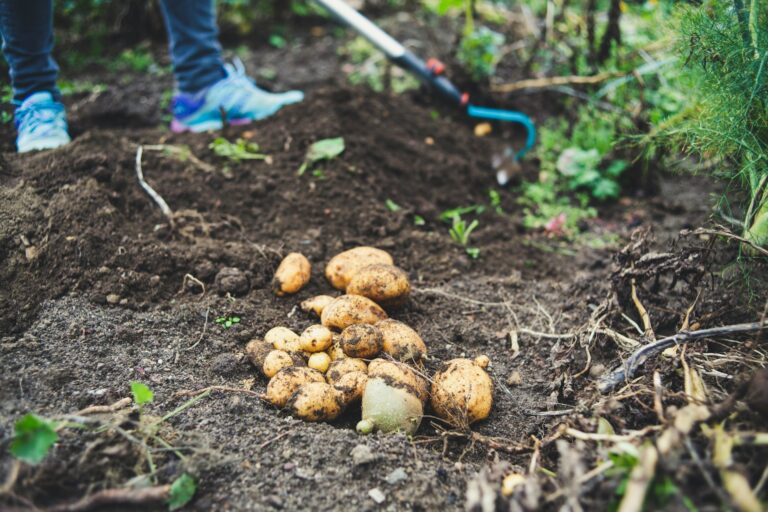
Yes. Potatoes dug while the plant is still green are commonly harvested as new potatoes. They are usually smaller and have thinner skins, so they are better for fresh eating than long storage.
The Practical Bottom Line
Watch the transition from strong top growth to underground tuber formation, then rapid bulking, and finally natural vine dieback. Keep the crop evenly watered during tuber initiation and bulking, maintain hills so tubers stay covered, and let vines mature naturally when you want a storage crop.
When the crop begins to finish, use How to Know When to Harvest Potatoes to decide when to dig. If you harvest too soon, see What Happens If You Harvest Potatoes Too Early?. If the crop is mature but you are not ready to dig, read How Long Can Potatoes Stay in the Ground?.

One Comment