The Only 5 Garden Tools You Need in Year One
Walk into any garden center and you’ll find entire aisles of specialized tools. Weeding knives, ergonomic trowels, soil knives, specialized hoes, pruning shears in six different sizes, cultivators, broadforks, and dozens of other items that promise to make gardening easier.
New gardeners see this overwhelming selection and either buy nothing or buy everything. Both approaches cause problems. Buying nothing means struggling with inadequate tools. Buying everything means spending $200+ on equipment you’ll barely use, cluttering your garage, and still not knowing which tools actually matter.
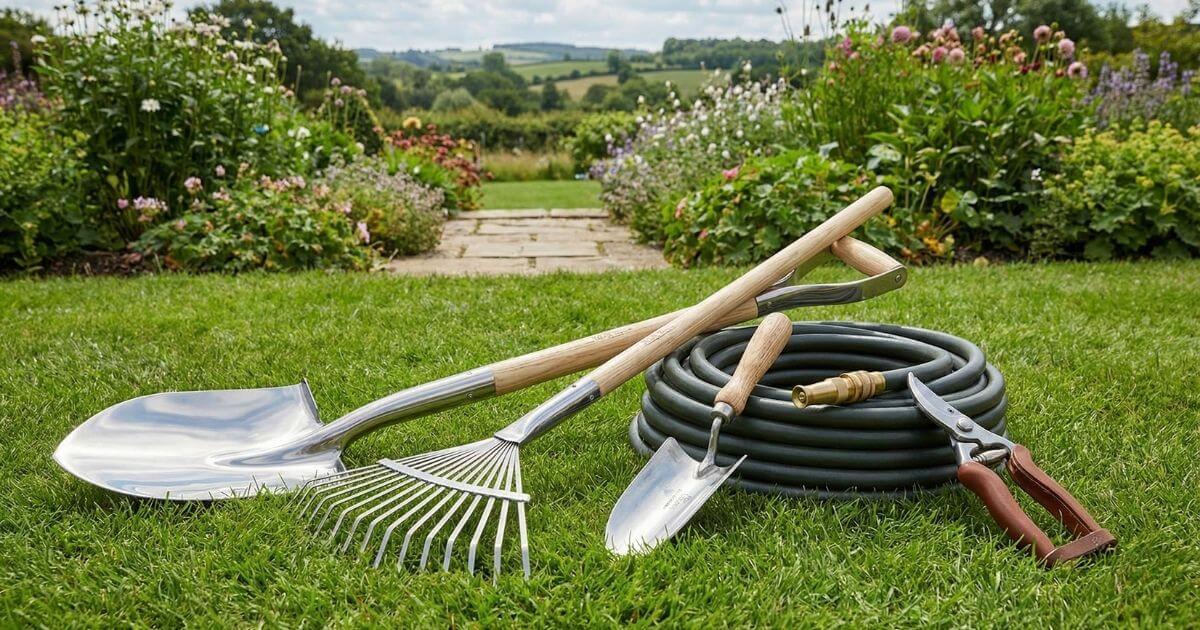
Here’s the truth: you need five basic tools to successfully grow vegetables and flowers in your first year. Not fifteen. Not fifty. Five. Everything else is either specialty equipment for specific situations or expensive versions of tools that do the same job as cheaper alternatives.
Let’s identify the five tools that actually matter, why you need them, and what to avoid wasting money on.
Tool 1: A Good Digging Tool (Shovel or Spade)
What it does: Moves soil, digs holes for transplants, turns compost, breaks ground, edges beds, mixes amendments into soil.
Why you need it: This is your workhorse tool. You’ll use it multiple times every gardening session. Digging planting holes, moving compost from pile to bed, breaking up compacted areas, creating new garden beds, all require a solid digging tool.
Shovel vs. spade, what’s the difference:
Shovel: Rounded blade, slight curve to the handle, designed for moving loose material (soil, compost, mulch). Better for scooping and transferring.
Spade: Flat, rectangular blade, straight handle, designed for cutting into soil and creating clean edges. Better for digging precise holes and breaking new ground.
Which should you buy: Either works fine. If you’re primarily working in existing beds with loose soil, a shovel is slightly more versatile. If you’re breaking new ground or creating beds from scratch, a spade cuts better. Most gardeners end up preferring one or the other based on personal comfort.
What to look for:
- Solid construction where handle meets blade (this is where cheap tools break)
- Comfortable handle length for your height (too short causes back pain)
- Steel blade, not aluminum (aluminum bends)
- D-grip or T-grip handle for better leverage
Price range: $25-45 for a quality tool that lasts decades. Avoid $15 budget versions that bend or break within a season.
What you don’t need: A $70 ergonomic specialty shovel. The basic hardware store version works fine.
Tool 2: A Garden Rake (Not a Leaf Rake)
What it does: Breaks up clumps in soil, levels beds, removes rocks and debris, creates smooth seedbeds, spreads compost and mulch evenly.
Why you need it: After digging or adding amendments, soil is lumpy and uneven. A rake breaks up clumps, smooths the surface, and prepares beds for planting. Seeds need good soil contact to germinate, a rake makes this possible.
Garden rake vs. leaf rake:
Garden rake (bow rake): Short, sturdy metal tines, straight across. Built for heavy work. This is what you need.
Leaf rake: Long, flexible tines that fan out. Designed for gathering leaves. Useless for soil work.
Buying “a rake” without specifying means you’ll likely get a leaf rake, which can’t do the jobs you need.
What to look for:
- Welded or forged head (not bolted, bolts loosen and fail)
- 14-16 tines is standard (fewer tines means more passes to cover area)
- Sturdy handle attachment
- Comfortable grip length
Price range: $20-35 for a solid garden rake. This tool lasts forever if not abused.
What you don’t need: Specialized rakes for specific tasks (thatch rakes, landscape rakes, etc.). One standard bow rake handles everything in a small garden.
Tool 3: A Hand Trowel
What it does: Digs small holes for transplants, removes individual weeds, mixes soil in containers, plants bulbs, works in tight spaces where a shovel doesn’t fit.
Why you need it: Not every job requires a full-size shovel. Transplanting seedlings into the garden needs precision and control. Weeding between established plants needs a small tool that doesn’t damage neighbors. A hand trowel is your precision instrument.
What to look for:
- One-piece construction or welded connection (plastic-handled trowels break where handle meets blade)
- Comfortable grip (you’ll hold this for extended periods)
- Slightly curved blade works better than flat for most tasks
- Stainless steel resists rust better than plain steel but costs more
Price range: $8-20. The cheap $3 versions break quickly. The $40 ergonomic specialty trowels aren’t necessary.
Pro tip: Buy a brightly colored one (many come with orange or red handles). Stainless steel trowels disappear in garden beds when you set them down. A bright handle means you’ll actually find it again.
What you don’t need: Multiple sizes of trowels. One standard-size trowel does everything. Skip the transplanting trowels, wide trowels, and narrow trowels, they’re solving problems you don’t have.
Tool 4: A Garden Hose with Adjustable Nozzle
What it does: Waters plants, fills watering cans, cleans tools and containers, rinses vegetables.
Why you need it: Watering is non-negotiable. You’ll do it 2-4 times per week all summer. Carrying watering cans from an indoor faucet gets old fast. A hose that reaches your garden makes watering manageable.
Hose length: Measure the distance from your outdoor faucet to your furthest garden bed and add 10-15 feet. Too short means it won’t reach. Too long means you’re dragging excess weight and dealing with tangles.
What to look for:
- Kink-resistant construction (cheap hoses kink constantly)
- Brass fittings, not plastic (plastic fittings crack and leak)
- 5/8-inch diameter is standard (3/4-inch for very long runs, 1/2-inch is too restrictive)
- Adjustable nozzle with multiple spray patterns (jet for cleaning, shower for gentle watering, mist for seedlings)
Price range:
- Decent 50-foot hose: $30-45
- Quality adjustable nozzle: $15-25
- Total: $45-70
What you don’t need:
- Expandable hoses (they burst after 1-2 seasons)
- Premium “professional grade” hoses (unnecessary for home gardens)
- Multiple specialized nozzles (one adjustable nozzle handles all watering needs)
The watering can question: Do you also need a watering can? Maybe. If you’re growing seedlings indoors or have containers near your door that are easier to water with a can, buy one. Otherwise, a hose with a gentle nozzle setting does the job. If you do buy a watering can, get a 2-gallon size, big enough to water multiple plants, small enough to carry when full.
Tool 5: Pruning Shears (Secateurs)
What it does: Harvests vegetables, deadheads flowers, prunes herbs, cuts twine and plant ties, removes dead plant material, trims overgrowth.
Why you need it: Trying to harvest tomatoes by pulling them damages plants. Cutting zucchini with a knife leaves ragged edges that invite disease. Pruning shears make clean cuts that heal quickly and don’t stress plants. You’ll use them almost daily during growing season.
Bypass vs. anvil, what’s the difference:
Bypass pruners: Two blades pass by each other like scissors. Makes clean cuts on live plant material. This is what you want.
Anvil pruners: One blade presses down onto a flat surface. Good for dead, dry wood. Crushes live plant stems. Skip these.
Buy bypass pruners. Period.
What to look for:
- Comfortable grip that fits your hand size
- Smooth action without excessive force needed
- Safety lock to keep blades closed when not in use
- Replaceable blades (quality pruners let you replace blades instead of buying new tool)
Price range: $15-30 for quality pruners that last years. The $8 versions work poorly and dull quickly. The $50+ professional versions are overkill for home gardens.
Maintenance tip: Wipe blades clean after use, especially if cutting diseased plant material. Occasional sharpening with a small file keeps them cutting cleanly.
What you don’t need: Multiple sizes of pruners, specialized flower snips, or heavy-duty loppers. One good pair of bypass pruners handles everything in a vegetable and flower garden.
The Tools You Don’t Need in Year One
Gardening stores want to sell you everything. Here’s what you can skip:
Cultivator/hand hoe: Supposed to make weeding easier. In practice, a trowel does the job just as well in small gardens. Save the money.
Stirrup hoe: Great for larger gardens with long rows. Overkill for a 4×8 raised bed. Wait until you expand.
Broadfork: Aerates soil without tilling. Costs $150-200. If you have compacted soil, adding organic matter works just as well and costs nothing.
Soil knife (Hori-Hori): Popular multi-use tool that’s supposed to replace several tools. In reality, it doesn’t do any single job as well as a dedicated tool. Your trowel and pruners already handle what a soil knife does.
Kneeling pad: Nice to have but not necessary. An old cushion or folded towel works fine.
Garden cart/wheelbarrow: Useful if you’re moving large amounts of compost or mulch. In a small first-year garden, you can carry what you need in a 5-gallon bucket. Add a wheelbarrow if you expand.
Expensive ergonomic specialty tools: Marketed to make gardening “easier on your body.” Some people with specific physical limitations benefit from these. Most gardeners don’t need them.
Tool storage systems: Wall-mounted organizers, tool sheds, fancy racks. Your garage or shed probably has space. Don’t buy organization systems before you know what tools you actually use regularly.
What About Gloves?
Gloves are borderline, some gardeners never use them, others can’t garden without them.
Skip gloves if: You like feeling the soil, have tough hands, and don’t mind dirt under fingernails.
Buy gloves if: Thorny plants bother you, you have sensitive skin, or you prefer keeping hands cleaner.
If buying gloves: Get nitrile-dipped work gloves ($8-12). They’re durable, washable, provide good grip when wet, and protect against thorns. Skip the $20 specialty garden gloves, they wear out just as fast.
The Total Cost of Essential Tools
Running the numbers:
- Shovel or spade: $30-40
- Garden rake: $25-30
- Hand trowel: $10-15
- Garden hose (50 ft) with nozzle: $50-65
- Bypass pruners: $20-25
Total: $135-175
That’s everything you need to successfully garden your first year. Not $500. Not “whatever fits in your cart.” Under $200 for tools that will last a decade or more if maintained properly.
You can reduce costs further:
Buy used. Check garage sales, estate sales, Craigslist, Facebook Marketplace. Tools from the 1970s-1990s were often better made than modern budget versions. A $5 vintage spade beats a $20 new one.
Borrow first year, buy second year. If you have gardening neighbors or friends, ask to borrow tools your first season. Prove to yourself you’ll use them before investing.
Buy off-season. November-February sales offer 20-40% off garden tools. Plan ahead and buy next year’s tools when stores are clearing inventory.
Tool Maintenance: Making Them Last
These five tools should last 10-20 years minimum. Here’s how:
After each use:
- Brush off dirt and plant material
- Rinse metal parts if muddy
- Dry before storing (prevents rust)
Seasonally:
- Sharpen blades (shovel, pruners) with a file
- Oil moving parts on pruners
- Tighten any loose handles or connections
- Check for damage or wear
Long-term storage (winter):
- Clean thoroughly
- Apply light coat of oil to metal parts
- Store in dry location (not outside)
- Hang tools to prevent handle warping
What kills tools:
- Leaving them outside in weather
- Storing them dirty
- Using wrong tool for wrong job (prying with shovels, forcing dull pruners)
- Buying cheap versions that can’t hold up to real use
One $30 quality shovel maintained properly lasts 20 years. Five $10 cheap shovels that break every few years cost $50 and create frustration.
When to Add Tools Beyond the Basic Five
After your first successful season, evaluate what tasks took excessive time or caused frustration. That’s when you add specialized tools:
- If weeding is your biggest time sink and you’ve expanded beyond 100 square feet, add a stirrup hoe
- If you’re moving lots of compost or mulch, add a wheelbarrow
- If you’re growing lots of flowers that need deadheading, dedicated flower snips might save time
- If you’ve added perennials that need annual pruning, loppers for thicker branches make sense
Let your actual experience guide tool purchases, not marketing or what other gardeners say you “need.”
Conclusion
You don’t need a garage full of specialized equipment to succeed at gardening. You need five fundamental tools: something to dig with, something to rake with, something for detail work, something to water with, and something to cut with.
These five tools shovel, rake, trowel, hose with nozzle, and pruners handle 95% of tasks in a home vegetable and flower garden. Everything else is either specialized equipment for specific situations or expensive versions of tools that accomplish the same work as basic alternatives.
Spend your money wisely on quality versions of these five tools. They’ll serve you for decades. Skip the specialty items until you’ve gardened long enough to know exactly what problems you’re trying to solve. Most “essential” tools being marketed to you aren’t essential at all, they’re solutions to problems you don’t have yet.
Key Takeaways
- Five tools handle 95% of first-year gardening tasks: shovel, rake, trowel, hose with nozzle, and pruners, everything else is optional
- Buy quality versions that last decades, not cheap versions that break in one season, $135-175 spent wisely covers all five tools
- A garden rake (bow rake) and leaf rake are completely different tools, make sure you buy the right one
- Bypass pruners cut living plant material cleanly; anvil pruners crush stems, always choose bypass
- Measure distance from faucet to garden before buying hose, add 10-15 feet to that measurement for proper length
- Skip specialty tools in year one: cultivators, broadforks, soil knives, ergonomic versions, your basic five already do these jobs
- Buy used tools when possible, vintage tools are often better quality than modern budget versions
- Clean and dry tools after each use, this simple habit makes them last 10-20+ years
- Let actual experience guide future tool purchases, don’t buy solutions to problems you don’t have yet
- One-piece or welded tool construction beats plastic handles and bolted connections, this is where cheap tools fail first