Quick answer: A money tree (Pachira aquatica) grows best in bright, indirect light, in a well-drained potting mix and a pot with drainage holes. Water thoroughly when the top inch or two of soil is dry, empty the saucer, and never let it sit in water, which causes root rot. Keep it at about 65 to 75°F, away from drafts and heating vents, with moderate humidity. Most leaf drop comes from overwatering, very dry soil, cold drafts or being moved.
Money trees are popular gifts and office plants, often sold with several slender trunks braided together. They’re forgiving once you understand two things: they hate wet feet, and they dislike change. This guide covers light, watering, humidity, soil, feeding and pruning, plus how to fix yellow or falling leaves and how to propagate your plant.
Money Tree at a Glance
| Need | What it likes |
|---|---|
| Botanical name | Pachira aquatica |
| Light | Bright, indirect light; direct sun can scorch leaves |
| Water | Water thoroughly when the top 1–2 inches are dry; never leave it in standing water |
| Temperature | About 65–75°F (NC State); keep above 45–50°F |
| Humidity | Moderate; around 50% is ideal |
| Soil | Well-drained mix, such as peat-based potting mix with perlite or sand |
| Size indoors | Usually 6–8 feet at most |
| Pets | Listed as non-toxic to dogs, cats and horses by the ASPCA |
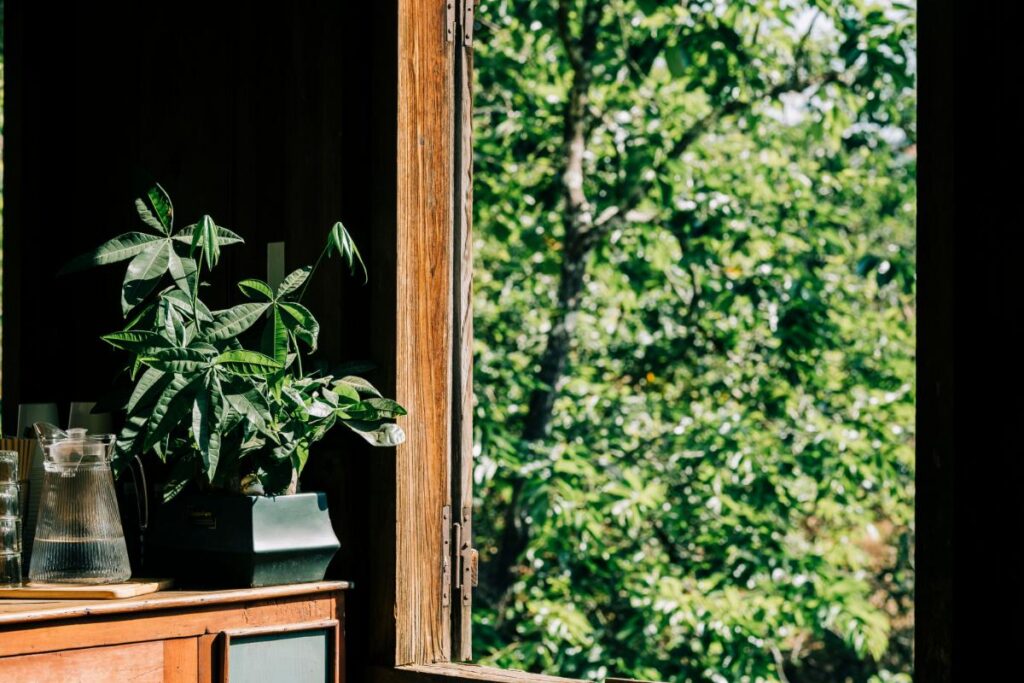
Money tree is not the same plant as the Chinese money plant (Pilea peperomioides), which has round, coin-shaped leaves, or the jade plant (Crassula ovata), a succulent sometimes called a money plant. A money tree has woody trunks and hand-shaped leaves made of five to nine glossy leaflets.
Where Money Trees Come From
Pachira aquatica is native to the American tropics, from southern Mexico into South America, where it grows in naturally wet, marshy places. NC State Extension notes it can reach 60 feet in the wild but usually stays 6 to 8 feet as a houseplant. Its flexible young trunks are what allow growers to braid them. Outdoors it is hardy only in USDA zones 10 to 12, and NC State notes that braided and indoor plants are unlikely to flower.
Light
The New York Botanical Garden (NYBG) recommends bright, filtered light: a room that gets sun for most of the day, but not right in the window, since strong direct sun can burn the leaves. NC State also warns that direct sun can scorch the foliage. An east-facing window, or a spot a few feet back from a south or west window, usually works well.
Money trees survive in lower light, but NYBG notes they slowly decline and lose their full, attractive look. Rotate the pot each time you water so it grows evenly rather than leaning toward the window.
How Often to Water a Money Tree
Despite its wetland origins and the name aquatica, a potted money tree rots quickly in soggy soil. The goal is thorough watering followed by a partial dry-down.
- Check the soil first. An Ask Extension expert advises watering when the top two inches of soil are dry. NYBG suggests letting the mix nearly dry between waterings, without letting the roots dry out completely.
- Water thoroughly. Soak the potting mix until water runs from the drainage holes.
- Empty the saucer. NYBG recommends checking after 15 minutes and removing any water left in the dish. NC State notes that standing water is not tolerated and can cause root rot.
- Water less in winter. NYBG notes the soil may dry at a different rate in winter, so check it rather than watering on a schedule. The University of Arizona Campus Arboretum suggests reducing watering in winter.
- Water the soil, not the trunk. NYBG links rotting stems to splashing water on the stem.
A pot with drainage holes is essential. A money tree in a decorative pot with no drainage, or sitting in a cachepot full of runoff, is at high risk of root rot.
Humidity and Temperature
Money trees are tropical plants. NYBG suggests a warm room between 65 and 85°F and humidity around 50%; NC State gives 65 to 75°F as the plant’s preferred range. Keep it away from cold drafts, air-conditioning vents and heating vents. NYBG notes that the plant tolerates changes in its environment poorly and often responds by dropping leaves.
In dry, heated homes, raise humidity by setting the pot on a tray of pebbles and water (keeping the pot above the waterline), grouping it with other plants, or running a humidifier nearby.
If you move your money tree outdoors for summer, choose dappled shade. NC State advises bringing it back indoors before temperatures drop to 45°F.
Soil and Repotting
Use a light, well-drained potting mix. NC State suggests a moist but well-drained mix of peat moss with perlite, loam or sand. A good-quality indoor potting mix with extra perlite works well.
NYBG suggests repotting every two to three years in spring, moving up only one pot size. Disturb the roots as little as possible: money trees often drop leaves after their roots are disturbed, though NYBG notes the leaves usually return with the next flush of growth.
Fertilizing
Feed only while the plant is actively growing. NYBG recommends a balanced fertilizer at half strength every two weeks from March to September, and none in winter. The University of Arizona Campus Arboretum also suggests feeding every two weeks in spring and summer.
Pruning and Braided Trunks
You can remove dead leaves and branches at any time. NYBG recommends pruning to shape in spring, when the plant is growing strongly, cutting about ½ inch above a node or leaf and removing no more than half the length of any stem. New growth will appear near the cuts.
For braided plants:
- Don’t cut into the braided section. NYBG specifically advises against it.
- Remove sprouts along the trunk. New stems that form at the base or along the trunk can be pinched off at any time, according to NYBG.
- Check for ties. Braided plants are sometimes sold with a band or tie holding the top of the braid. If one is still there, loosen or remove it so it doesn’t cut into the trunks as they thicken.
- Braiding must be done young. The University of Arizona Campus Arboretum notes trunks can only be braided while young and pliable.
Why Are My Money Tree Leaves Turning Yellow or Falling Off?
Most money tree problems show up in the leaves. Here’s how to read them, based on guidance from NYBG, NC State and Ask Extension.
| What you see | Likely cause | What to do |
|---|---|---|
| Yellow leaves, soil stays wet, soft stems | Overwatering or poor drainage | Let the soil dry more between waterings, empty the saucer, check roots for rot |
| Leaves dropping, soil very dry | Soil allowed to dry out too much | Water thoroughly and check the soil more often |
| Leaves dropping after a move or repotting | Shock from change or root disturbance | Keep conditions stable and wait for new growth |
| Leaves dropping near a door, vent or window | Hot or cold drafts | Move to a steady, draft-free spot |
| Yellowing and leaf fall in autumn | Shorter days and lower light | Give more light if possible; leaves usually return |
| Crispy, curling leaves | Low humidity, too little light, or uneven watering | Raise humidity and keep watering consistent |
| Brown, scorched patches | Direct sun | Move back from the window or filter the light |
| Sticky leaves, white cottony spots, tiny flies | Scale, mealybugs, aphids or fungus gnats | Isolate and treat; let the soil surface dry |
NC State also lists low humidity and a lack of nutrients as possible causes of yellow leaves. The good news, NYBG notes, is that leaves lost to shock or seasonal change usually return with the next flush of growth once conditions are right.
How to Propagate a Money Tree
NC State lists softwood cuttings, layering and seed as ways to propagate money trees. Stem cuttings are the easiest at home:
- In spring or summer, cut a healthy stem a few inches long with at least a couple of leaf nodes.
- Remove the lower leaves.
- Root the cutting in water or in moist potting mix in bright, indirect light. The University of Arizona Campus Arboretum notes cuttings can be slow to root and suggests a rooting hormone.
- Once roots are a couple of inches long, pot the cutting in a well-drained mix.
A cutting grows into a leafy plant, but you’ll need several young, flexible stems grown together if you want to braid them.
Is a Money Tree Safe for Pets?
The ASPCA lists Pachira aquatica as non-toxic to dogs, cats and horses, though it notes that eating the plant may still cause nausea, vomiting or loose stool. It’s best to discourage pets from chewing it.
Frequently Asked Questions
How often should I water a money tree?
There’s no fixed schedule. Water thoroughly when the top inch or two of soil is dry, then empty the saucer. That might be every week or so in a bright, warm room in summer, and less often in winter.
Can a money tree live in low light?
It can survive in lower light, but it will grow slowly, lose its fullness, and may drop leaves. A spot with bright, indirect light most of the day is best.
How big do money trees get indoors?
NC State notes they typically grow no more than 6 to 8 feet tall as houseplants, though they can reach 60 feet in the wild.
Do money trees flower indoors?
Rarely. NC State notes money trees are unlikely to flower indoors or when braided.
Should I mist my money tree?
NYBG recommends a tray of wet pebbles under the pot to raise humidity around the leaves. Grouping plants together or running a humidifier also helps in dry winter air.
The Bottom Line
Give your money tree bright, indirect light, a well-drained pot, and thorough watering only when the top of the soil is dry. Keep it warm, out of drafts, and in one place, and feed it lightly in spring and summer. If leaves yellow or drop, check the watering and look for recent changes before doing anything drastic. For more houseplant help, see our guides to dracaena care, easy plants to propagate from cuttings and Christmas cactus care.
Sources
- NC State Extension Gardener Plant Toolbox: Pachira aquatica
- New York Botanical Garden: Money tree (Pachira aquatica) guide
- New York Botanical Garden: Why did my money tree lose all its leaves?
- New York Botanical Garden: How do I care for my money tree houseplant?
- University of Arizona Campus Arboretum: Pachira aquatica
- Ask Extension: Diagnose problem with money tree
- ASPCA: Money tree