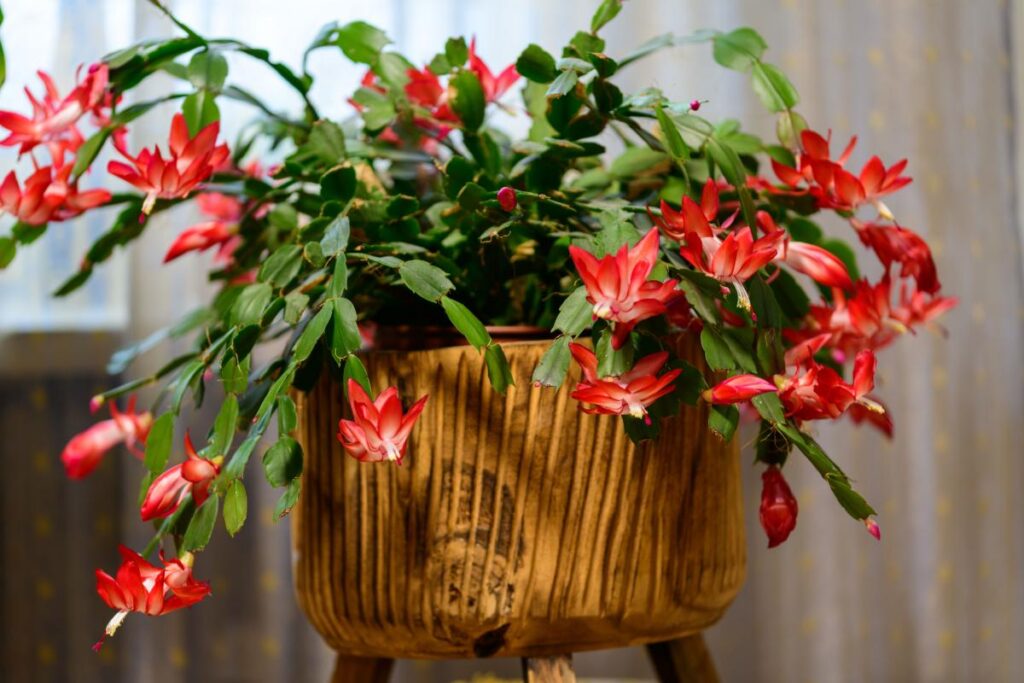
Quick answer: Christmas cacti bloom when they get long, uninterrupted nights and cool temperatures in fall. Give the plant about 12 to 14 or more hours of complete darkness each night, with nights around 55 to 65°F, for several weeks, and flower buds should appear. Grow it in bright, indirect light, water when the top of the soil is dry, keep it slightly pot-bound, and keep the soil evenly moist once buds form so they don’t drop. Many plants sold as Christmas cacti are actually Thanksgiving cacti, which bloom about a month earlier.
Christmas cacti are among the longest-lived houseplants; some are passed down for generations. They’re easy to keep alive, but getting one to rebloom every year depends on understanding what triggers its flowers. This guide covers everyday care, how to make your plant bloom, why buds drop, and how to tell a Christmas cactus from a Thanksgiving or Easter cactus.
Christmas, Thanksgiving or Easter Cactus?
Three plants are sold as “holiday cacti,” and they’re often mixed up. Illinois Extension notes that most so-called Christmas cacti in stores are actually Thanksgiving cacti, because they bloom in time for the holiday season. The easiest way to tell them apart is the shape of the flat stem segments, which work like leaves.
| Thanksgiving cactus | Christmas cactus | Easter cactus | |
|---|---|---|---|
| Botanical name | Schlumbergera truncata | Schlumbergera × buckleyi | Hatiora (Rhipsalidopsis) gaertneri |
| Stem segment edges | 2 to 4 sharp, pointed teeth, like claws | Rounded, scalloped edges | Very rounded, with small bristles |
| Flower shape | Tubular | Tubular, often drooping | Flat and star-shaped |
| Anther color | Yellow | Purplish-brown | n/a |
| Usual bloom time | Late November to December | December into late winter | Spring |
Clemson Extension adds that the anther color, the pollen-bearing tips in the center of the flower, is a reliable second clue: yellow on Thanksgiving cacti, purplish-brown on Christmas cacti. Thanksgiving and Christmas cacti need the same care. The Easter cactus has different bloom triggers, covered below.
How to Care for a Christmas Cactus
Christmas cacti are not desert cacti. In the wild they grow as epiphytes on trees in shady Brazilian rainforests, so they prefer more moisture and less sun than a typical cactus.
Light
Grow your plant in bright, indirect light. Clemson notes that holiday cacti grow best in light shade, and that bright summer sun can turn the stems pale or yellow. The RHS suggests an east-facing windowsill as usually ideal. In fall and winter, more direct light is fine.
Watering
University of New Hampshire Extension advises watering once the potting mix is dry to the touch, letting excess water drain away, and never leaving the pot standing in water. Overly wet soil, especially in winter, leads to root rot. When in doubt, UNH suggests erring toward underwatering.
The exception is when the plant is budding and blooming. Iowa State University Extension recommends keeping the soil evenly moist during this time, because drying out can make buds and flowers drop.
Temperature
During spring and summer, Clemson gives 70 to 80°F as the ideal growing range. In fall, cooler nights help set flower buds. Don’t leave plants outdoors once nights drop below about 50°F.
Soil and repotting
Holiday cacti need a light, well-drained mix. Illinois and Clemson suggest a cactus potting mix or about 60 to 80% potting soil with 20 to 40% perlite. They also flower best when slightly pot-bound, so repot only every few years, ideally in spring after flowering. Iowa State notes they can go many years without repotting.
Fertilizing
Clemson recommends feeding monthly from late winter or early spring through summer with a half-strength soluble houseplant fertilizer, then stopping in late summer to encourage fall flower buds. Clemson also notes holiday cacti have a higher magnesium requirement than many plants and suggests a monthly feeding of Epsom salt (1 teaspoon per gallon of water) during the growing season, applied in a different week from the regular fertilizer.
How to Get a Christmas Cactus to Bloom
Christmas and Thanksgiving cacti are short-day plants: they form flower buds as nights get longer and temperatures cool in fall. Most reblooming problems come down to one of these two triggers being missed.
1. Long, uninterrupted nights
Extension recommendations vary a little, from at least 12 hours (Illinois) to 14 hours or more (Clemson) of complete darkness each night. Iowa State notes that most plants need 14 to 16 hours, though some cultivars bloom with 12. The darkness must be unbroken: Clemson warns that as little as two hours of light interrupting the night can prevent buds forming. Lamps, street lights and car headlights can all be enough.
How long to keep this up also varies by source, from about three weeks (South Dakota State) to at least six (Clemson). Clemson suggests starting long nights around mid-September; buds usually appear in three to four weeks.
The easy way: move the plant in early fall to a cool room that isn’t used at night, such as a spare bedroom, so it gets only natural daylight. Wisconsin Extension suggests covering the plant or moving it into a dark closet at night if your home stays warm.
2. Cool nights
Cool temperatures work together with long nights. Illinois Extension suggests days of 65 to 70°F and nights of 55 to 65°F. Several extension services note that nights around 55°F can trigger buds even without strict darkness, while temperatures above about 70°F can prevent flowering. Avoid going below 50°F, which can cause buds to drop.
3. Leave it alone once buds form
Once buds appear, the light schedule no longer matters, and you can move the plant somewhere you’ll enjoy it. Iowa State and Wisconsin both advise against moving it to very different light or temperature conditions until flowers start to open, since sudden changes can make buds drop. Keep the soil evenly moist and the plant away from heaters and drafts.
Easter cactus is different
The Easter cactus needs a longer, more specific treatment. Iowa State describes three to four weeks of long nights at 60 to 70°F, followed by four to six weeks at 47 to 55°F, after which it flowers in spring.
Why Is My Christmas Cactus Dropping Buds?
Bud drop is one of the most common complaints. Causes listed by Clemson, Iowa State and UConn include:
- Sudden changes in temperature or light, often from moving the plant once buds have formed
- Soil drying out while the plant is budding or flowering
- Overwatering and soggy soil
- Temperatures that are too warm, or too cold (below about 50°F)
- Drafts from doors, windows or heating vents
- Too many buds, more than the plant can support
Why Won’t My Christmas Cactus Bloom?
- Light at night. Clemson identifies interrupted darkness as a common reason plants fail to flower.
- Too warm. A warm living room in fall can stop buds forming even with long nights.
- Fed too late. Stop fertilizing in late summer.
- Pot too large. Clemson notes holiday cacti flower best when kept somewhat pot-bound.
- It’s a Thanksgiving cactus. If yours reliably blooms in November, check the stem edges.
How to Propagate a Christmas Cactus
Christmas cacti are easy to root from cuttings. Iowa State’s method:
- Twist or cut off a section of 2 to 5 stem segments at a joint.
- Let the cut end dry and callus overnight.
- Insert the base about 1 inch deep into moist perlite or coarse sand, the right way up. Iowa State notes cuttings inserted upside down won’t root.
- Keep in bright, indirect light and water when the medium starts to dry.
- Roots form in about 6 to 8 weeks. Once they’re about an inch long, pot the cuttings in a well-drained mix.
Clemson suggests taking cuttings in May or June and covering the pot with a clear plastic bag to keep humidity high while roots form.
Is Christmas Cactus Toxic to Pets?
The ASPCA lists Christmas cactus as non-toxic to dogs, cats and horses.
Frequently Asked Questions
How often should I water a Christmas cactus?
Water when the top of the potting mix feels dry, then let the excess drain. That might be weekly in a warm, bright room in summer and less often in winter. Keep the soil evenly moist while the plant is in bud and flower.
Can a Christmas cactus go outside in summer?
Yes. Many gardeners move them to a shady spot outdoors for summer. Bring the plant back in before nights drop below about 50°F, and check it for pests first.
Should I prune a Christmas cactus?
Clemson suggests pinching back stems in early June to encourage branching. Flowers form at the stem tips, so more branches mean more flowers.
How long does a Christmas cactus bloom?
Clemson notes flowering can last up to 7 to 8 weeks in cooler conditions, while Wisconsin says plants usually bloom for 2 to 3 weeks at around 70°F. Cooler rooms keep flowers going longer.
The Bottom Line
A Christmas cactus needs bright, indirect light, water when the top of the soil is dry, and a slightly snug, well-drained pot. To get blooms, give it long, completely dark nights and cool temperatures in early fall, then keep it in one place and evenly moist once buds form. For more winter houseplant care, see our guides to overwintering coleus and plants that are easy to propagate from cuttings.
Sources
- Clemson Cooperative Extension HGIC: Thanksgiving and Christmas cacti
- Iowa State University Extension: All about holiday cacti
- Iowa State University Extension: How can I propagate a Christmas cactus?
- University of Illinois Extension: How to identify and care for holiday cacti
- South Dakota State University Extension: A cactus for every holiday
- University of Wisconsin-Madison Extension: Holiday cactus
- UConn Home and Garden Education Center: Holiday cacti
- UNH Extension: How often should I water a Christmas cactus?
- NC State Extension: Holiday cacti, what’s the difference?
- ASPCA: Christmas cactus
- RHS: How to grow Christmas cactus