
8 Best Tomato Fertilizers: Organic, Liquid and Slow-Release Picks
This guide may contain affiliate links. Learn more
The right fertilizer helps tomato plants flower well, set fruit and keep producing through the summer. The wrong one, usually a feed too heavy in nitrogen, gives you a big leafy plant with very few tomatoes. Most tomato-specific fertilizers solve this by supplying more phosphorus and potassium than nitrogen, and many add calcium.
This guide compares eight widely available tomato fertilizers: organic granular feeds, a fast-acting water-soluble feed, an organic liquid and slow-release spikes. For each one we’ve summarized the label analysis, how often it’s applied, and the strengths and drawbacks that come up most often in the manufacturer’s information and owner feedback.
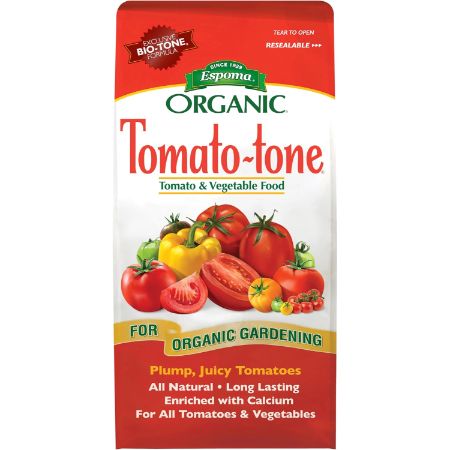 Espoma Organic Tomato-tone 3-4-6
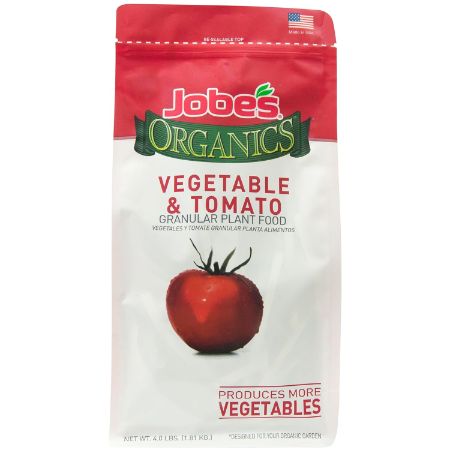 Jobe’s Organics Granular Tomato & Vegetable Fertilizer 2-5-3
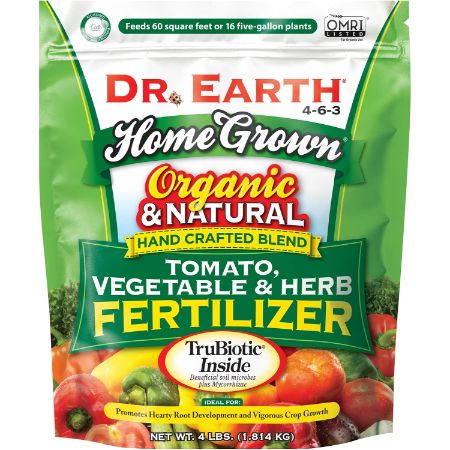 Dr. Earth Home Grown Tomato, Vegetable & Herb Fertilizer 4-6-3
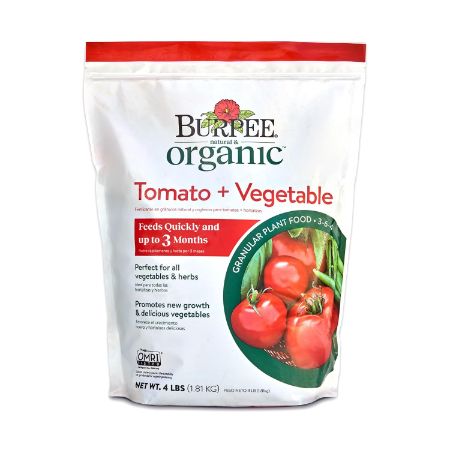 Burpee Organic Tomato & Vegetable Granular Plant Food 3-6-4
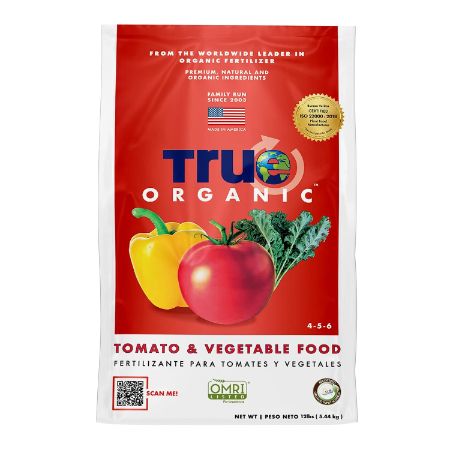 True Organic Tomato & Vegetable Food 4-5-6
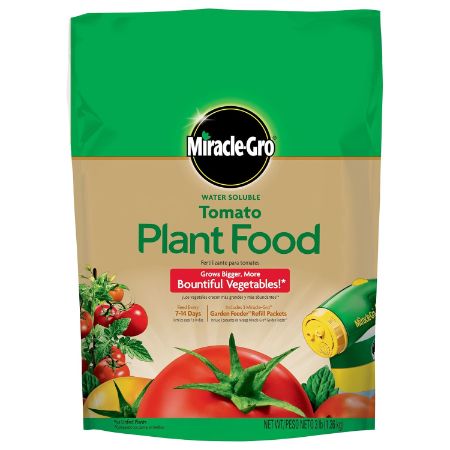 Miracle-Gro Water Soluble Tomato Plant Food 18-18-21
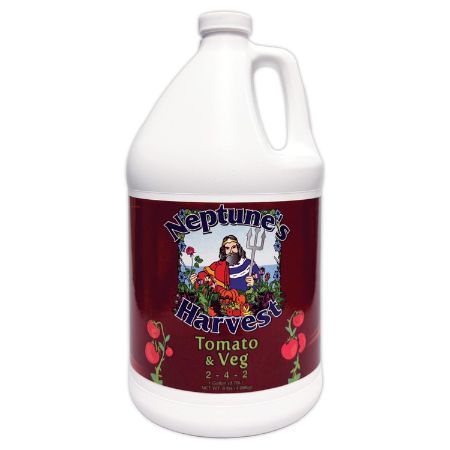 Neptune’s Harvest Tomato & Veg 2-4-2
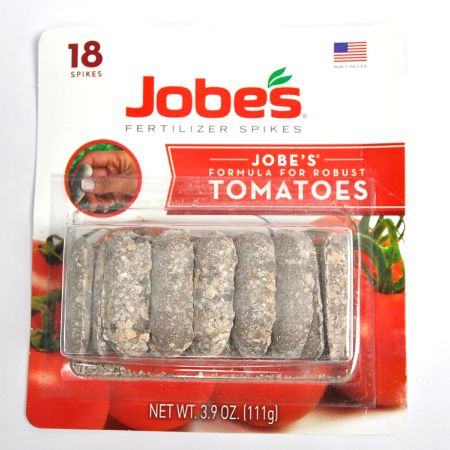 Jobe’s Tomato Fertilizer Spikes 6-18-6
Espoma Organic Tomato-tone 3-4-6
Tomato-tone is one of the longest-established organic tomato fertilizers. It’s a slow-release granular blend with a 3-4-6 analysis, so it leans toward potassium and phosphorus rather than leafy nitrogen, and it adds 8% calcium.
Buy on AmazonPros
- Balanced for fruiting, not foliage
- Slow release, so it’s hard to overdo
- Clear rates for beds, rows and pots
Cons
- Needs repeat feeding every couple of weeks in peak season
- Slow-release organics work more gradually than water-soluble feeds
- Granules have to be scratched in and watered
Full specs and review
Specifications
- Analysis: 3-4-6 (N-P-K), plus 8% calcium
- Form: Slow-release organic granules with Espoma’s Bio-tone microbes
- Size: 4 lb bag
- Feeding schedule: Espoma recommends twice a month from May through August on established plants
- Rate: About 3 tablespoons per plant, kept at least 3 inches from the stem
Key Features and Performance Highlights
- Low nitrogen and higher potassium suit fruiting rather than leafy growth
- Calcium content is aimed at gardeners worried about blossom end rot
- Can be mixed into the soil at planting and used as a side-dressing later
- Espoma gives separate rates for rows, single plants and containers
Also good
- Also works on peppers, squash and melons
Who It’s Best For
Organic gardeners who want a dedicated tomato feed with added calcium and don’t mind a twice-monthly routine in summer.
Overall Impression
Tomato-tone is the safe, all-round choice for organic tomato beds and containers. Its potassium-leaning analysis matches what fruiting tomatoes need, and the clear label rates make it easy to use correctly.
Jobe’s Organics Granular Tomato & Vegetable Fertilizer 2-5-3
Jobe’s granular tomato and vegetable food is an OMRI-listed organic feed with a 2-5-3 analysis and 7% calcium. It’s applied less often than Tomato-tone, about every four to six weeks.
Buy on AmazonPros
- OMRI listed for organic gardening
- Feeding every 4 to 6 weeks keeps upkeep low
- Includes calcium and secondary nutrients
Cons
- Owners often mention a strong smell after application
- Low nitrogen may need supplementing on very poor soils
- Granules must be worked into the soil
Full specs and review
Specifications
- Analysis: 2-5-3 (N-P-K), plus 7% calcium, 0.5% magnesium and 1.4% sulfur
- Form: Organic granules, OMRI listed
- Ingredients: Bone meal, processed poultry manure and sulfate of potash
- Size: 4 lb bag
- Feeding schedule: Every 4 to 6 weeks during the growing season
Key Features and Performance Highlights
- Phosphorus-leaning formula for roots, flowers and fruit
- Calcium included alongside magnesium and sulfur
- Longer interval between feedings than many organic tomato feeds
- Labeled for a wide range of vegetables, from peppers and squash to beans and eggplant
Also good
- Very widely reviewed, with consistently high ratings
Who It’s Best For
Gardeners who want an organic, calcium-rich feed for a mixed vegetable garden and prefer to fertilize every month or so rather than every two weeks.
Overall Impression
A dependable, low-effort organic option. The 2-5-3 analysis and longer feeding interval make it a good fit for busy gardeners, as long as you can live with the smell for a day or two.
Dr. Earth Home Grown Tomato, Vegetable & Herb Fertilizer 4-6-3
Dr. Earth’s Home Grown tomato, vegetable and herb fertilizer (listed on Amazon as Organic 5) is a 4-6-3 organic blend that adds beneficial soil microbes and mycorrhizal fungi. It’s one of the best-selling organic vegetable feeds on Amazon.
Buy on AmazonPros
- Feeds for a long time between applications
- Includes soil microbes and mycorrhizae
- Works for tomatoes, vegetables and herbs alike
Cons
- Owner reviews often mention odor after application
- Some owners report fungus gnats or ants, especially in containers
- More nitrogen than some tomato feeds, so avoid overapplying on lush plants
Full specs and review
Specifications
- Analysis: 4-6-3 (N-P-K)
- Form: Organic granules with beneficial soil microbes and mycorrhizae
- Size: 4 lb bag
- Feeding schedule: Every other month through the growing season, per the retailer directions
- Coverage: About 60 square feet of garden row, or 16 five-gallon containers, per 4 lb bag
Key Features and Performance Highlights
- Slightly more nitrogen than most tomato-specific feeds, useful for young plants
- Microbes and mycorrhizae are included to support soil life and roots
- Long interval between applications
- Suitable for in-ground beds, raised beds and containers
Also good
- Good value for the amount
Who It’s Best For
Organic gardeners feeding a whole vegetable and herb garden who want infrequent applications and like the idea of adding soil biology.
Overall Impression
A versatile organic feed with a long interval between applications. It’s a strong choice for mixed vegetable gardens; in containers, mix it into the soil rather than leaving granules on the surface to limit smell and insects.
Burpee Organic Tomato & Vegetable Granular Plant Food 3-6-4
Burpee’s organic tomato and vegetable food is a 3-6-4 granular feed that releases nutrients immediately and keeps feeding for up to three months. It’s OMRI listed and includes calcium.
Buy on AmazonPros
- One application can last up to three months
- OMRI listed for organic use
- Includes calcium and minor nutrients
Cons
- Slower to act than a liquid or water-soluble feed
- Fewer reviews than the biggest-selling brands
- You still need to water it in well after applying
Full specs and review
Specifications
- Analysis: 3-6-4 (N-P-K), with calcium and minor nutrients
- Form: Organic granules, OMRI listed, with beneficial microorganisms
- Size: 4 lb resealable bag
- Feeding schedule: Feeds for up to 3 months per application
Key Features and Performance Highlights
- Some nutrients release straight away, the rest over about three months
- Phosphorus-leaning analysis for roots and fruit
- Suitable for seed starting, transplants, established beds and containers
- Resealable bag makes storage easy
Also good
- Simple sprinkle-and-water application
Who It’s Best For
Gardeners who want the fewest possible feedings: one application at planting and perhaps one more mid-season.
Overall Impression
Burpee’s three-month feeding window makes it the lowest-maintenance granular option here, with a sensible tomato-friendly analysis.
True Organic Tomato & Vegetable Food 4-5-6
True Organic’s tomato and vegetable food is a 4-5-6 organic granular feed with 6% calcium, made from poultry manure, seabird guano, fish bone meal and shellfish meals. This listing is the 12 lb bag, which covers about 210 square feet; smaller sizes are also sold.
Buy on AmazonPros
- Good balance of nutrients for fruiting crops
- Calcium included
- Large bag covers a big garden economically
Cons
- Owners frequently mention a strong manure smell
- A 12 lb bag is more than a small container garden needs
- Animal-based ingredients may not suit every gardener
Full specs and review
Specifications
- Analysis: 4-5-6 (N-P-K), plus 6% calcium and 1% sulfur; 3% of the nitrogen is slow-release
- Form: Organic granules
- Size: 12 lb bag (covers about 210 sq ft); also sold in 4 lb, 8 lb and 25 lb sizes
- Feeding schedule: Monthly during the growing season
Key Features and Performance Highlights
- Potassium-leaning analysis with added calcium
- Mix of quick and slow-release nitrogen
- Labeled for in-ground and container plants
- Large bag gives a low cost per square foot
Also good
- Monthly schedule is easy to remember
Who It’s Best For
Gardeners with several beds of tomatoes and vegetables who want an organic, calcium-rich feed at a low cost per square foot.
Overall Impression
A well-balanced organic feed that’s particularly good value for larger gardens. If you only grow a few pots, choose a smaller size.
Miracle-Gro Water Soluble Tomato Plant Food 18-18-21
Miracle-Gro’s tomato plant food is a synthetic, water-soluble fertilizer that you mix in a watering can or hose-end feeder. It feeds immediately and is the fastest-acting option in this guide.
Buy on AmazonPros
- Fastest results of any type here
- Easy to apply while watering
- Inexpensive per feeding
Cons
- Not organic
- Needs reapplying every one to two weeks
- High-analysis feeds are easier to overapply than organic granules
Full specs and review
Specifications
- Analysis: 18-18-21 (N-P-K)
- Form: Synthetic water-soluble crystals
- Size: 3 lb container (about 1,200 sq ft of garden per container, per Miracle-Gro)
- Feeding schedule: Every 7 to 14 days
- Rate: 1½ tablespoons per 1½ gallons of water, applied to the soil at the base of the plant
Key Features and Performance Highlights
- Nutrients are available to the plant immediately
- Slightly higher potassium than nitrogen for fruiting crops
- Works with a watering can or Miracle-Gro’s hose-end feeder
- Can be used on all vegetables
Also good
- Precise, consistent dosing
Also keep in mind
- Does nothing to build soil organic matter
Who It’s Best For
Gardeners who want quick, predictable results, especially for container tomatoes, which lose nutrients each time they’re watered.
Overall Impression
The most convenient fast-acting feed. Follow the label rate carefully, and pair it with compost or mulch if you want to improve the soil over time.
Neptune’s Harvest Tomato & Veg 2-4-2
Neptune’s Harvest Tomato & Veg is an organic liquid made from fish, seaweed, molasses, yucca extract and humic acids. This listing is the 1-gallon size, which makes up to 128 gallons of feed.
Buy on AmazonPros
- Organic feed that works more quickly than granules
- Gentle analysis, low risk of burning plants
- Flexible soil or foliar use
Cons
- Needs frequent application
- Higher upfront price than granular feeds
- The maker’s recommended program involves a second product for flowering
Full specs and review
Specifications
- Analysis: 2-4-2 (N-P-K), plus 1% calcium
- Form: Organic liquid concentrate
- Size: 1 gallon (makes up to 128 gallons)
- Feeding schedule: Every 1 to 2 weeks
- Rate: 1 ounce per gallon of water for outdoor plants
Key Features and Performance Highlights
- Liquid feed that’s taken up faster than organic granules
- Can be applied to the soil or as a foliar spray
- Fish and seaweed base adds trace elements
- The maker suggests switching to its Rose & Flowering formula once plants begin to flower
Also good
- Concentrate goes a long way
Who It’s Best For
Organic gardeners who want a liquid feed they can apply while watering, particularly for containers and raised beds.
Overall Impression
A good organic liquid for regular feeding. Use it every week or two through the season, or follow the maker’s two-step program if you want to switch formulas at flowering.
Jobe’s Tomato Fertilizer Spikes 6-18-6
Jobe’s tomato spikes are pre-measured, slow-release fertilizer sticks that you push into the soil around each plant. They’re the least hands-on option here.
Buy on AmazonPros
- Very easy to use, especially in containers
- Little mess or smell
- Long interval between applications
Cons
- Nutrients concentrate around each spike rather than spreading evenly
- Some owners report spikes breaking when pushed into hard soil
- One pack of 18 covers only a few plants per application
Full specs and review
Specifications
- Analysis: 6-18-6 (N-P-K)
- Form: Slow-release fertilizer spikes
- Size: 18 spikes
- Feeding schedule: Each application feeds for up to about 8 weeks
- Use: Insert around the plant at planting or early in the season; follow the package for the number per plant
Key Features and Performance Highlights
- Pre-measured doses remove the guesswork
- High-phosphorus analysis aimed at flowering and fruit
- Feeds below the surface near the roots
- No mixing, spreading or measuring
Also good
- Inexpensive
Who It’s Best For
Container and beginner gardeners who want the simplest possible feeding routine.
Overall Impression
The easiest tomato fertilizer to use. It’s ideal for a few pots on a patio; for large beds, a granular feed spreads nutrients more evenly.
Buying Guide: How to Choose a Tomato Fertilizer
Start with your soil
A soil test is the most reliable guide. Iowa State University Extension recommends working an all-purpose fertilizer into the bed before planting if you haven’t tested the soil, then feeding again with a dilute fertilizer three to four weeks after transplanting. A test tells you whether your soil is actually short of phosphorus, potassium or calcium before you buy a specialty product.
Watch the nitrogen
Too much nitrogen is the classic tomato mistake. Rutgers Cooperative Extension lists excess nitrogen as a common cause of plants that are all foliage and no fruit, and warns against fertilizers where nitrogen is more than three times the phosphorus or potassium. That’s why most tomato feeds have a middle or last number as high as, or higher than, the first.
Granular, liquid or spikes?
- Organic granules (Tomato-tone, Jobe’s, Dr. Earth, Burpee, True Organic) release nutrients gradually, are hard to overapply, and add organic matter.
- Water-soluble and liquid feeds (Miracle-Gro, Neptune’s Harvest) act quickly but need applying every one to two weeks.
- Spikes (Jobe’s) are the easiest, but feed only the area around each spike.
Calcium and blossom end rot
Several products here add calcium. That can help where soil calcium is low, but blossom end rot is usually caused by uneven watering rather than a lack of calcium in the soil. University of Maryland Extension suggests adding gypsum at planting only if the soil calcium level is low. Steady moisture matters most; see our guide to how often to water tomato plants.
Containers need more frequent feeding
Frequent watering washes nutrients out of pots, so container tomatoes usually need feeding more often than plants in the ground. Liquid feeds and spikes are especially convenient for pots.
FAQs
What is the best NPK ratio for tomatoes?
There isn’t one perfect ratio. Tomato feeds generally keep nitrogen equal to or lower than phosphorus and potassium, as in 3-4-6, 2-5-3 or 18-18-21, so the plant puts energy into flowers and fruit rather than excess leaves. A soil test is the best way to choose.
When should I start fertilizing tomatoes?
Mix a granular fertilizer into the soil at planting, then start regular feeding once plants are established. Iowa State suggests a dilute feeding three to four weeks after transplanting, and Rutgers suggests side-dressing when the first fruits are about an inch across and again when you pick the first ripe fruit.
Can you over-fertilize tomatoes?
Yes. Too much nitrogen produces leafy plants with few tomatoes, and too much of any fertilizer can raise salt levels in the soil. Always follow the label rate.
Is organic or synthetic fertilizer better for tomatoes?
Both can grow excellent tomatoes. Organic granules feed more slowly and add organic matter to the soil; synthetic water-soluble feeds work faster and are easier to dose precisely. Many gardeners use an organic granular feed at planting and a liquid feed during fruiting.
Conclusion
For most gardeners, an organic granular feed like Espoma Tomato-tone, Jobe’s Organics or Burpee is the easiest way to feed tomatoes well, with low risk of overdoing it. Choose Dr. Earth or True Organic for a whole vegetable garden, Miracle-Gro when you want fast results, Neptune’s Harvest for an organic liquid, and Jobe’s spikes for the simplest container routine. Whatever you choose, keep nitrogen in check, follow the label, and pair feeding with steady watering and full sun; see how much sun tomatoes need.
Sources
- Iowa State University Extension: Growing tomatoes in the home garden
- Rutgers Cooperative Extension: Growing tomatoes in the home garden
- University of Maryland Extension: Growing tomatoes in a home garden
- Alabama Cooperative Extension System: Blossom drop in tomato